The Latvia economy is driven by services, manufacturing, and agriculture within the EU. Timber, electronics, and food processing are key exports, while Rigas financial sector and tourism grow. EU membership supports trade and investment, but an aging population and emigration pose challenges. Investments in digital infrastructure and renewable energy aim to boost competitiveness, though income inequality and bureaucratic hurdles linger as obstacles to sustained economic growth.
Latvia Economy Size
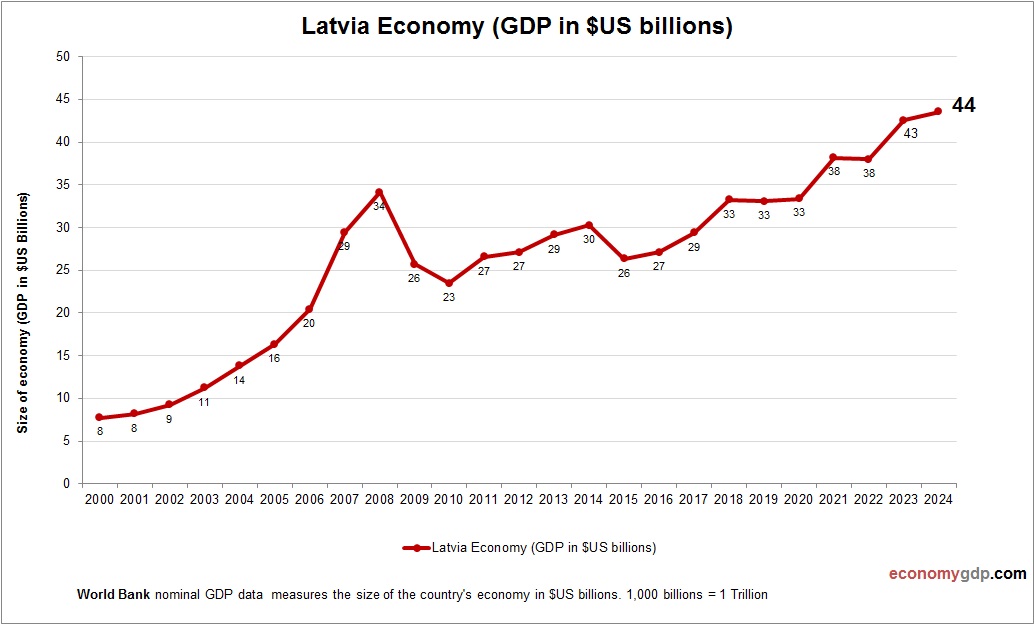
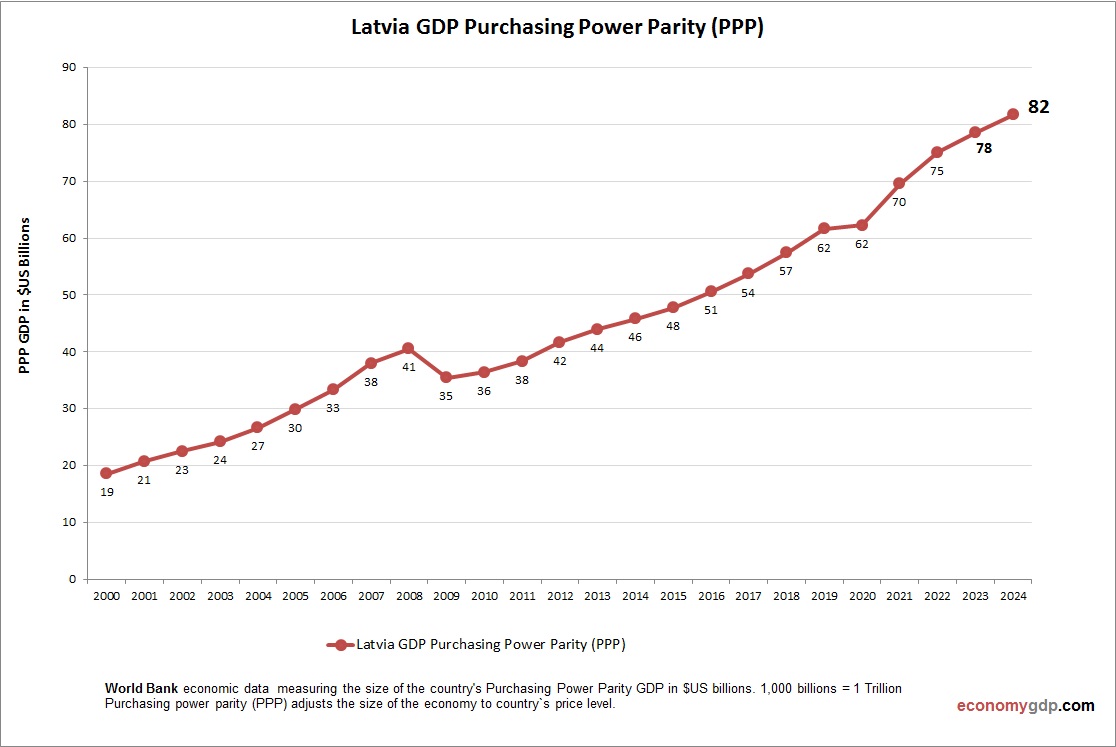
Latvia’s economy, valued at $40 billion, is small within the EU, with services and industry driving its GDP, supported by trade integration. See Latvia GDP.
Latvia Purchasing Power Parity (PPP)
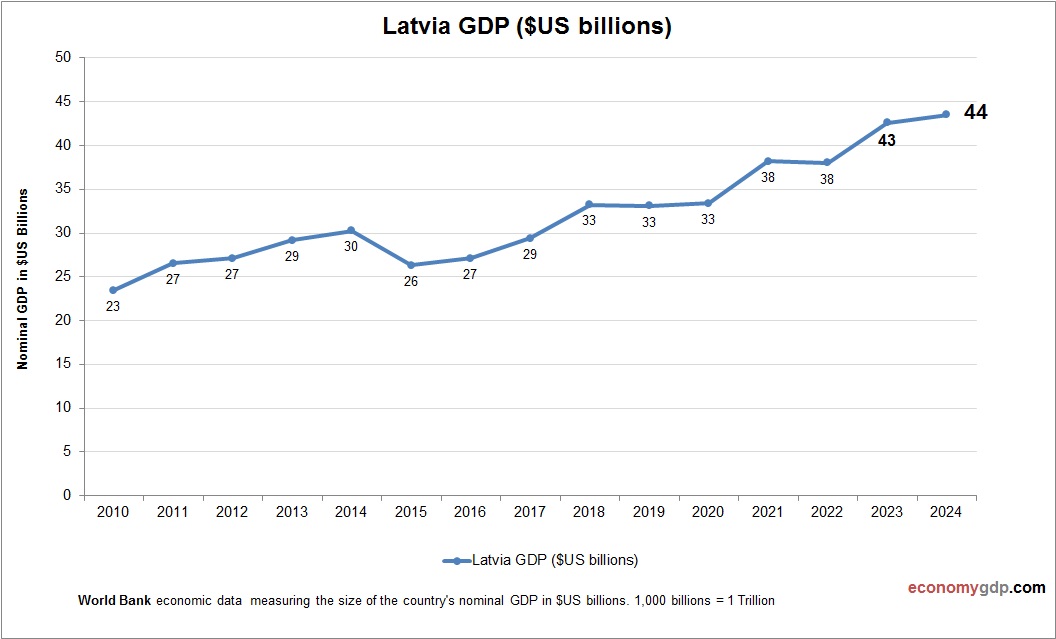
Latvia’s economy has a PPP GDP of $80 billion, double its $40 billion nominal GDP, reflecting lower costs for services and industry. PPP per capita is around $40,000, indicating strong purchasing power within the EU. Domestic pricing supports markets, but emigration and export reliance limit broader PPP benefits.
Latvia Growth Rate
The economic growth rate is 2.8% in 2024, fueled by services and manufacturing. EU integration and digital exports support growth, but emigration and energy import reliance limit gains. Agriculture contributes modestly, while green energy investments drive resilience, positioning the economy for steady progress within the EU.

Latvia Inflation
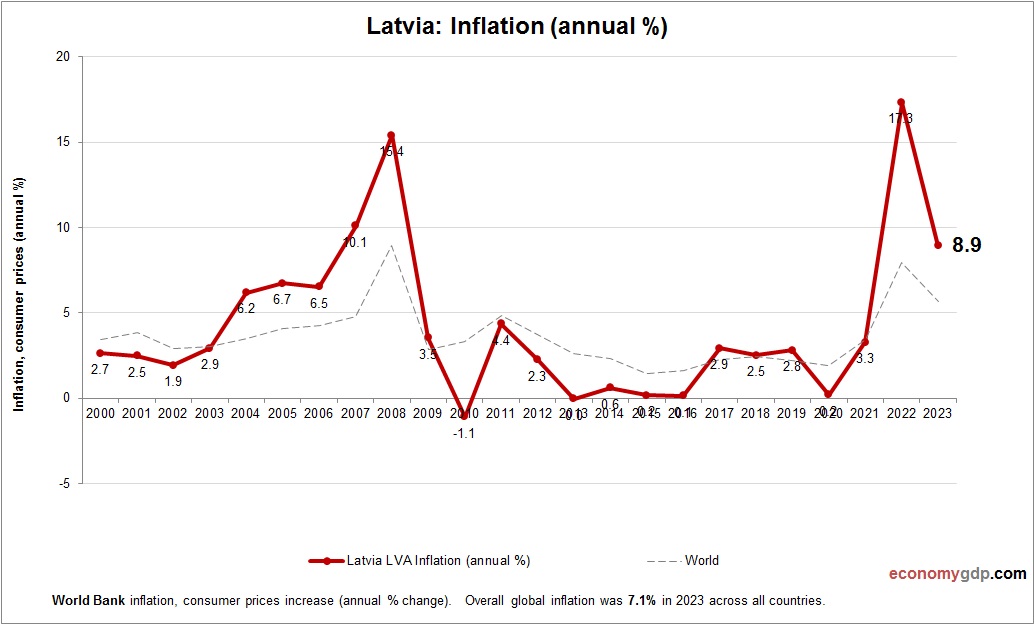
Latvia’s inflation rate is around 3% in 2024, driven by rising energy and food import costs within the EU. Strong manufacturing exports and wage growth add demand-side pressure, while global supply chains remain strained. Eurozone monetary tightening and stable governance keep inflation moderate, though import reliance poses risks.