The Cambodia economy thrives on garment exports, tourism, and agriculture. Textiles dominate exports, while Angkor Wat drives tourism revenue. Rice and rubber are key agricultural outputs. Rapid urbanization and foreign investment, particularly from China, fuel growth, but poverty, weak infrastructure, and corruption pose challenges. Efforts to diversify into electronics and improve education aim to sustain progress, though reliance on low-cost labor and vulnerability to global demand fluctuations remain risks.
Cambodia Economy Size
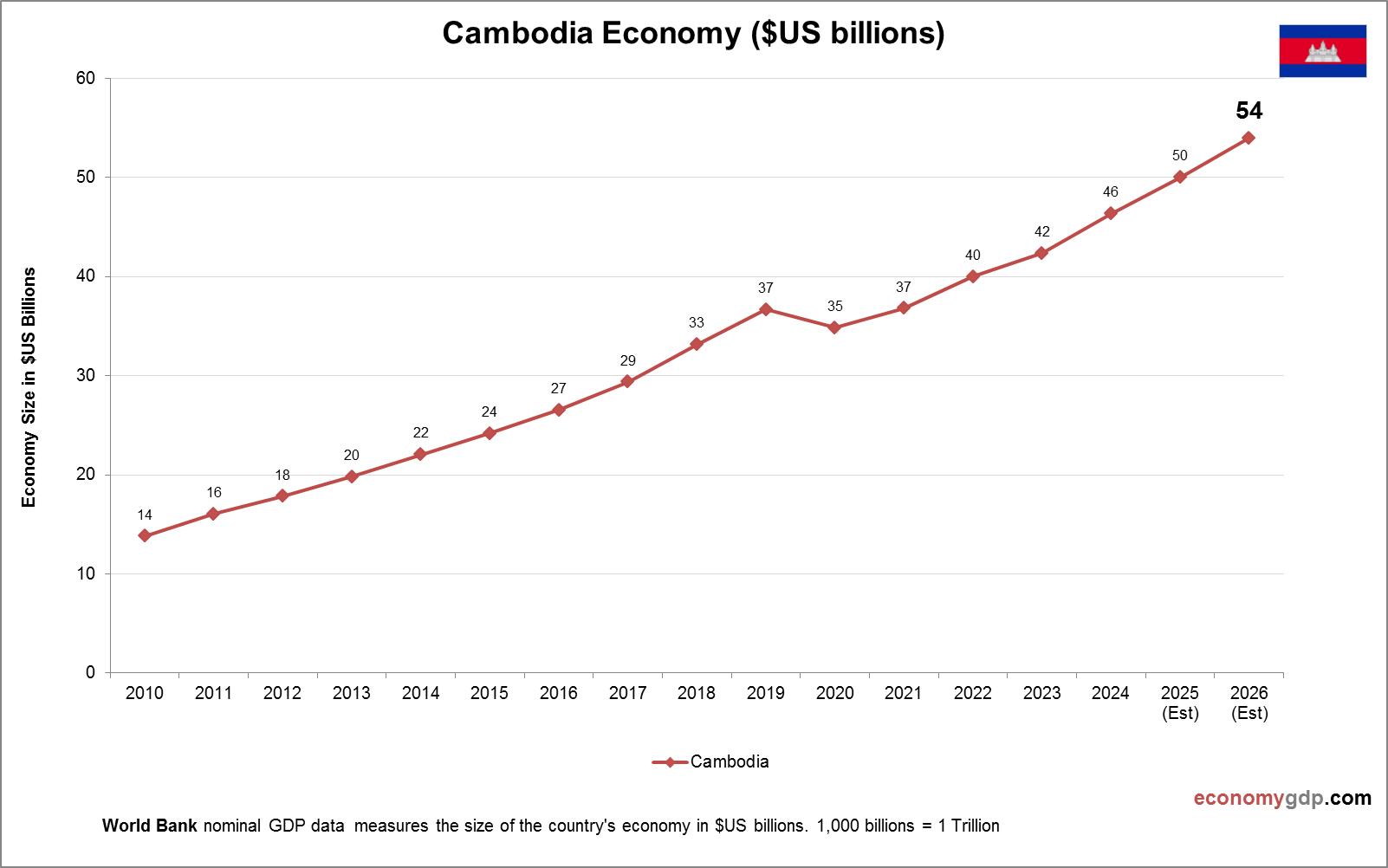
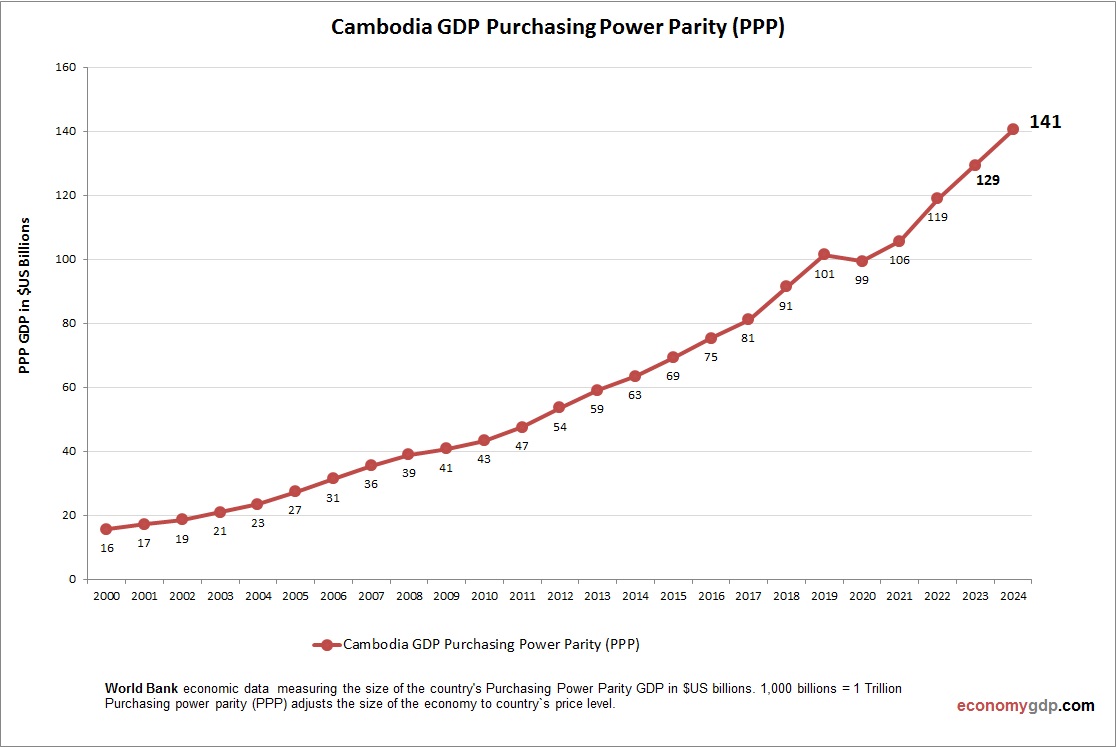
Cambodia’s economy, valued at $30 billion, is small but growing rapidly. Textiles, tourism, and agriculture fuel its GDP, with foreign investment driving economic expansion. See Cambodia GDP.
Cambodia Purchasing Power Parity (PPP)
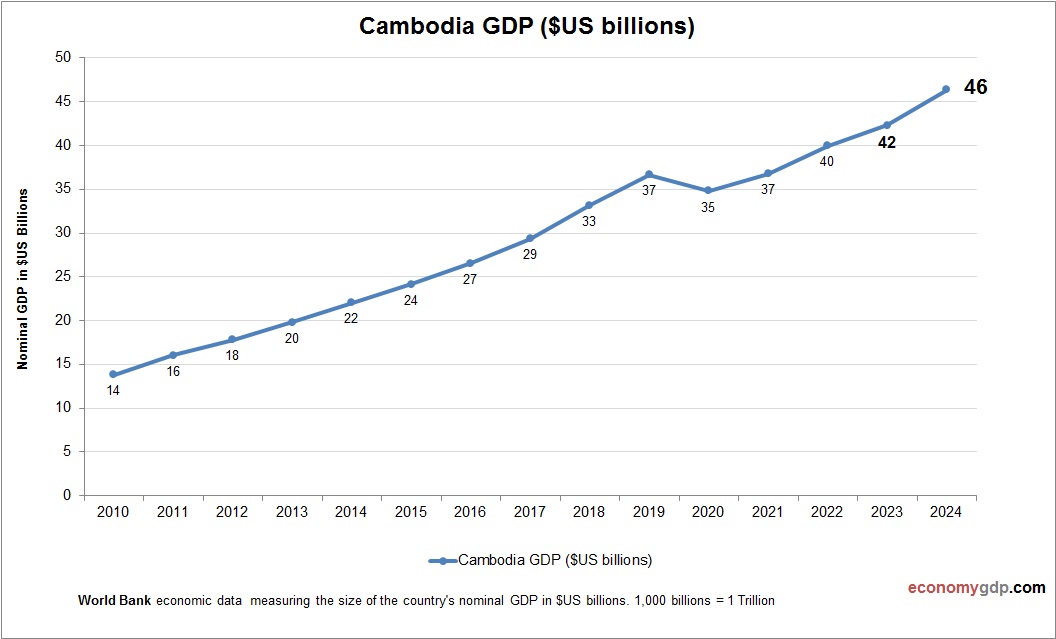
Cambodia’s economy has a PPP GDP of $90 billion, triple its $30 billion nominal GDP, due to low costs for textiles and tourism. PPP per capita is around $5,500, indicating modest purchasing power. Rapid growth amplifies domestic markets, but poverty persists. PPP underscores Cambodia’s potential as an emerging economy with significant cost-driven advantages.
Cambodia Growth Rate
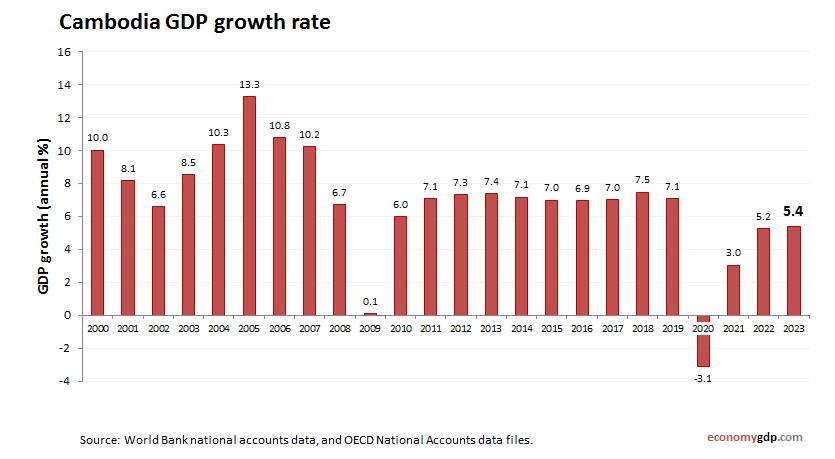
The economic growth rate is 5.8% in 2024, driven by garment exports and tourism recovery. Foreign investment in infrastructure and real estate boosts activity despite trade slowdowns. Low labor costs support manufacturing, but Chinese investment reliance and limited diversification pose risks. A young workforce fuels sustained momentum.
Cambodia Inflation
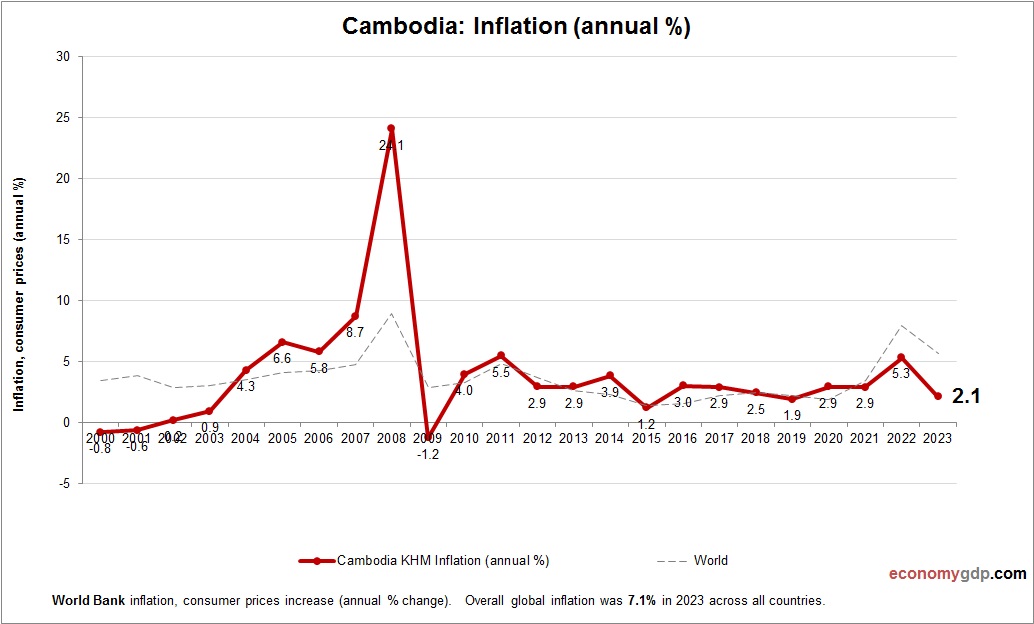
Cambodia’s inflation rate is around 3% in 2024, driven by rising global food and fuel prices. Strong export demand for garments increases domestic costs, while currency stability limits imported inflation. Agricultural disruptions from flooding add pressure. Monetary policy and foreign investment inflows help keep inflation low for a growing economy.