Australia’s economy is driven by mining, agriculture, and services. Iron ore, coal, and natural gas exports dominate, with companies like BHP leading globally. Agriculture, including wheat and beef, is a key contributor. Services, particularly education and tourism, thrive in cities like Sydney. Emerging industries include renewable energy, with solar and green hydrogen projects expanding, and critical minerals for batteries. Australia’s stable economy benefits from trade with Asia, though it faces climate-related challenges. Investments in tech startups and sustainable mining practices position it as a leader in the global energy transition.
Australia Economy Size
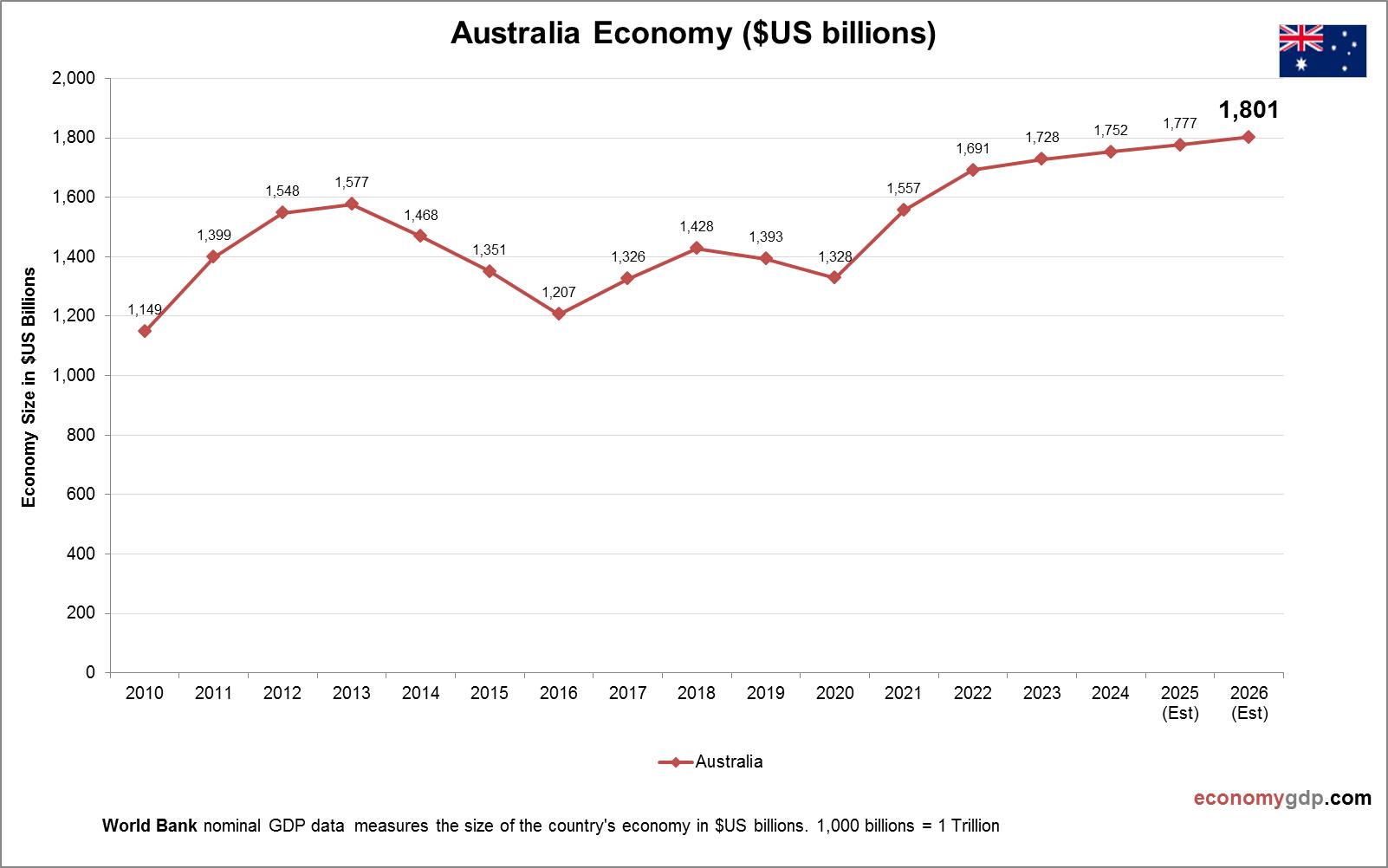
Australia’s economy has a nominal GDP of approximately $1.6 trillion. Mining, agriculture, and services are key drivers, with iron ore and natural gas as major exports. Its GDP benefits from strong trade with Asia and a robust education sector. Investments in renewable energy and critical minerals support growth, positioning Australia as a stable, resource-rich economy with a growing role in the global energy transition. See Australia GDP.

Australia Purchasing Power Parity (PPP)
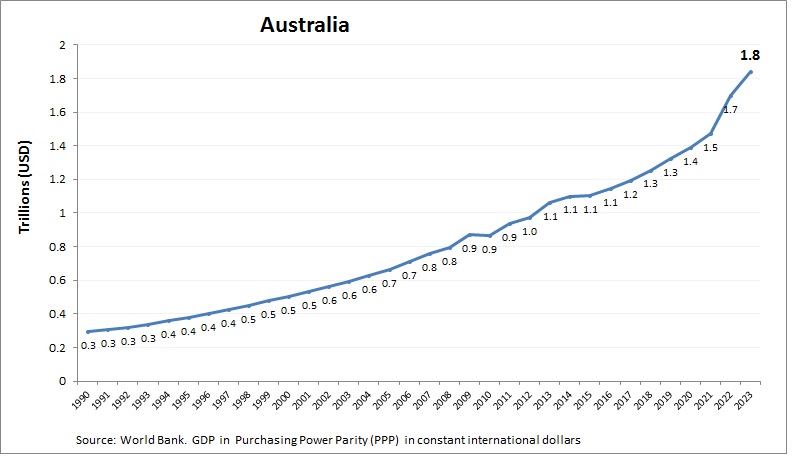
Australia’s economy, with a PPP GDP of about $1.7 trillion, is driven by mining, agriculture, and services. High living costs temper PPP, but resource exports boost purchasing power. Trade with Asia and a strong education sector enhance its economic scale. Investments in renewable energy and critical minerals support its PPP GDP, positioning Australia as a stable, resource-rich economy with a growing role in the global energy transition.
Australia Growth Rate
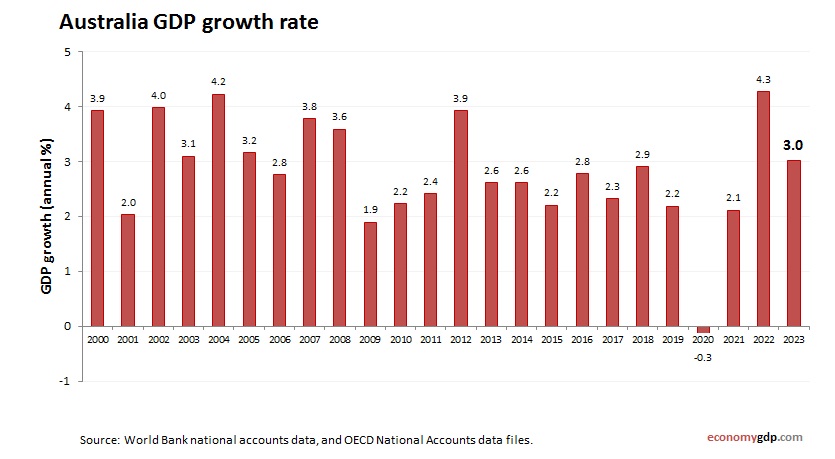
Australia’s economy is projected to grow at 1.6% in 2025. Mining, agriculture, and services fuel expansion, with iron ore and natural gas exports driving growth. Trade with Asia and a robust education sector support momentum. Climate risks and global commodity price fluctuations pose challenges, but investments in renewable energy and critical minerals ensure steady growth, reinforcing Australia’s role in the global economy.
Australia Inflation
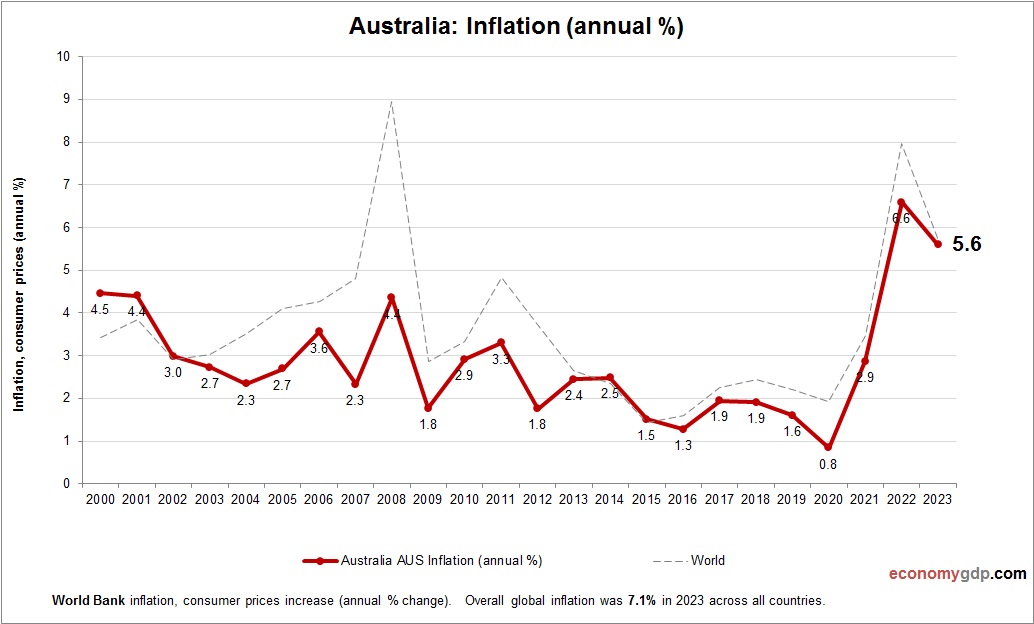
The Australia’s inflation is moderate at 2.5%, driven by energy costs and housing shortages. Strong mining and agricultural exports add pressure, but global commodity price stabilization and tight monetary policy limit increases. High living costs and trade with Asia sustain inflation, while investments in renewable energy help moderate energy prices, keeping inflation within a manageable range for economic stability.