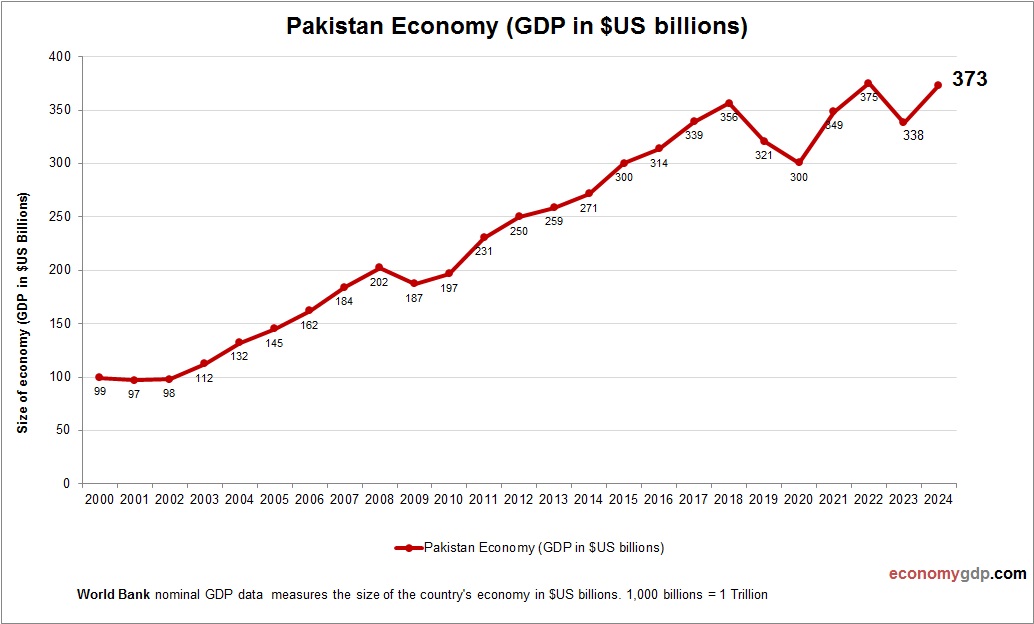
Pakistan’s economy, worth $350 billion, relies on agriculture, which employs 40% of the workforce and produces cotton, wheat, and rice. Textiles dominate exports, contributing 60% of foreign earnings. The IT sector is emerging, with growing freelancing and tech startups in Karachi. Remittances (10% of GDP) and mining (coal, copper) are vital. Energy, including hydropower and renewables, is expanding to address shortages. Political instability, debt, and security issues challenge growth, but CPEC infrastructure projects with China enhance trade potential, particularly through Gwadar port.
Pakistan Economy Size
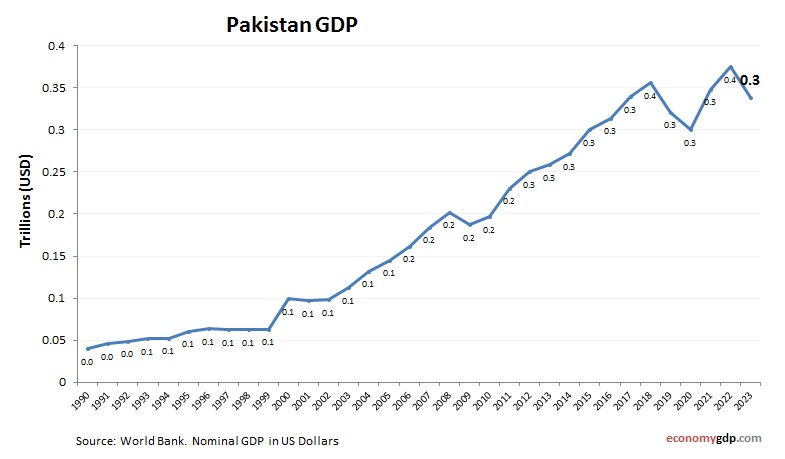
Pakistan’s economy, at $350 billion, is sizable, with agriculture and textiles driving its GDP, bolstered by remittances and trade. See Pakistan GDP.
Pakistan Purchasing Power Parity (PPP)
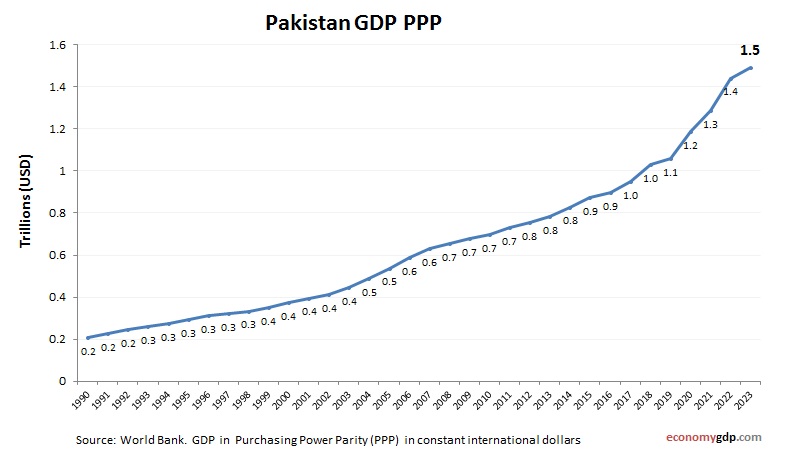
Pakistan’s economy has a PPP GDP of $1.6 trillion, over four times its $350 billion nominal GDP, driven by low costs for agriculture and textiles. PPP per capita is around $7,000, indicating modest purchasing power. Domestic pricing boosts large markets, but debt and instability limit PPP-driven economic growth.
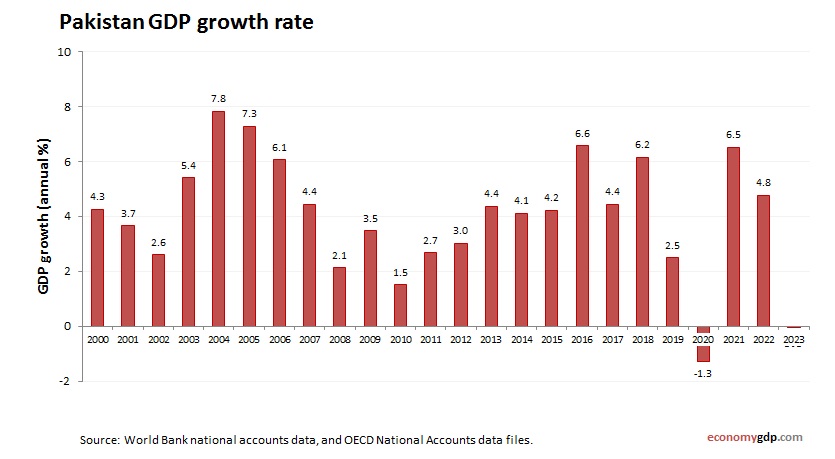
Pakistan Growth Rate
The economic growth rate is 4.8% in 2024, fueled by agriculture and textiles. Cotton exports and infrastructure investments support growth, but debt and energy shortages pose risks. Remittances and regional trade drive resilience, while a young workforce enhances momentum, positioning the economy for robust progress in South Asia.
Pakistan Inflation
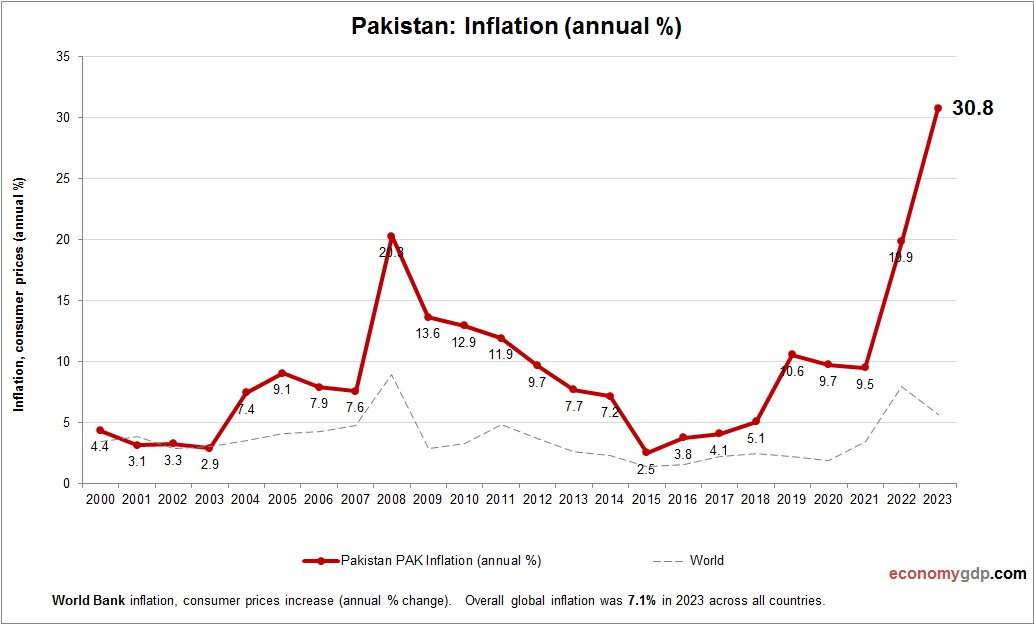
Pakistan’s inflation rate is about 10% in 2024, driven by currency depreciation and rising global food and energy prices. Supply chain disruptions and agricultural setbacks from floods increase costs, while remittances fuel demand. Monetary tightening and IMF support aim to stabilize, but structural challenges sustain elevated inflation.