
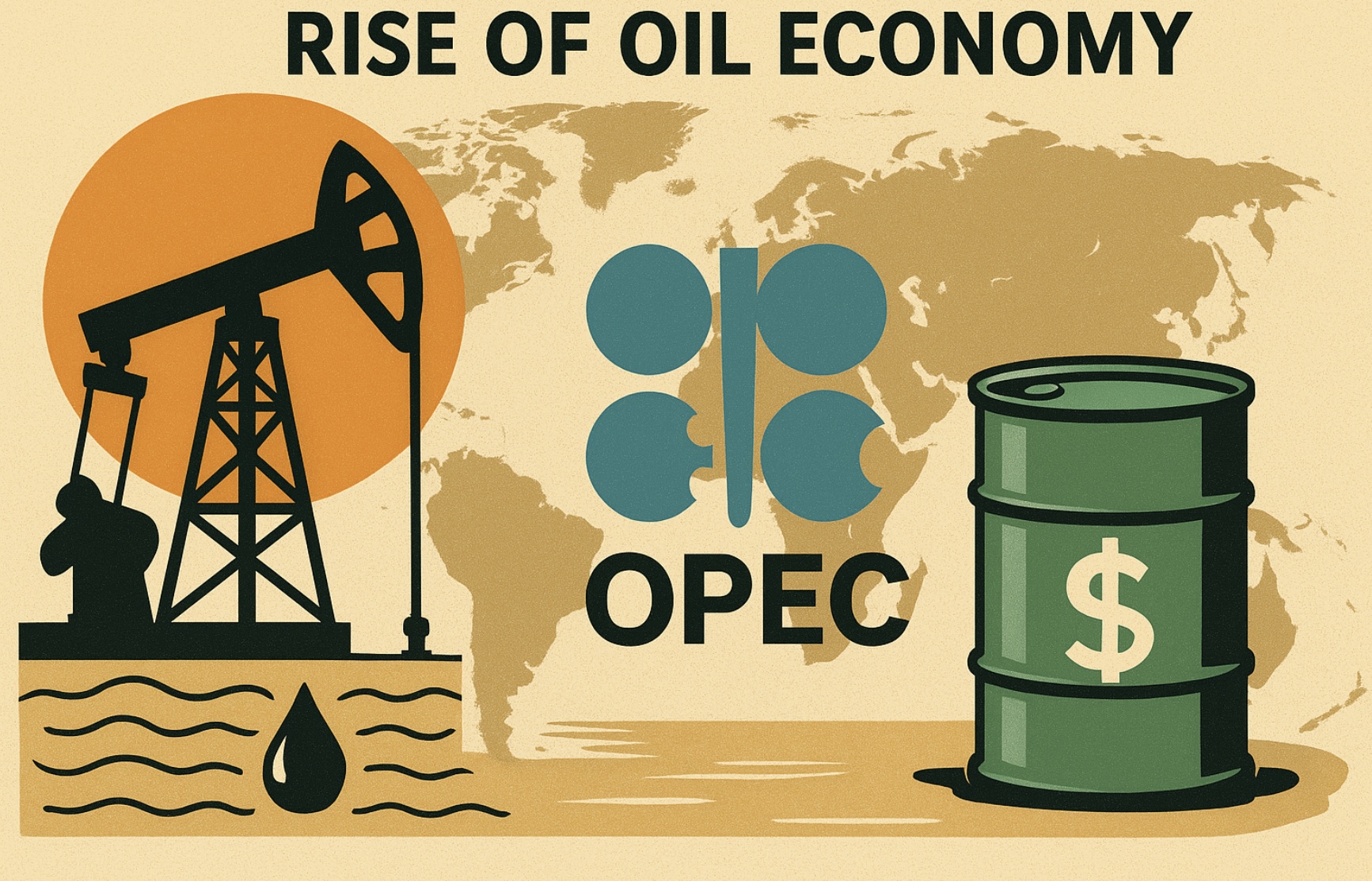
The rise of the oil economy transformed the global economic landscape in the 20th century, reshaping industries, trade, and geopolitics. Before oil became dominant, coal powered much of the world’s energy needs, but the discovery of vast oil reserves in the Middle East, the United States, and Russia shifted the balance. As cars, airplanes, and industrial machinery demanded more fuel, crude oil quickly became the backbone of modern economies. The wealth generated from oil exports turned previously underdeveloped regions into global players, while industrial nations became heavily dependent on imported energy. This dependency created a powerful link between energy production and economic stability, influencing everything from consumer prices to foreign policy.
The creation of the Organization of the Petroleum Exporting Countries (OPEC) in 1960 marked a turning point in global energy governance. Formed by major oil-producing nations such as Saudi Arabia, Iran, Iraq, Kuwait, and Venezuela, OPEC sought to coordinate production and stabilize prices to ensure fair returns for producers. Its collective influence became evident during the 1973 oil crisis, when OPEC’s production cuts led to massive price surges and economic shocks in importing nations. Over the decades, OPEC has remained a key player in shaping oil markets, balancing between stabilizing global supply and protecting member interests. Even as renewable energy grows and global energy policies shift toward sustainability, OPEC’s decisions still ripple across economies—demonstrating the enduring impact of oil on global power dynamics.