
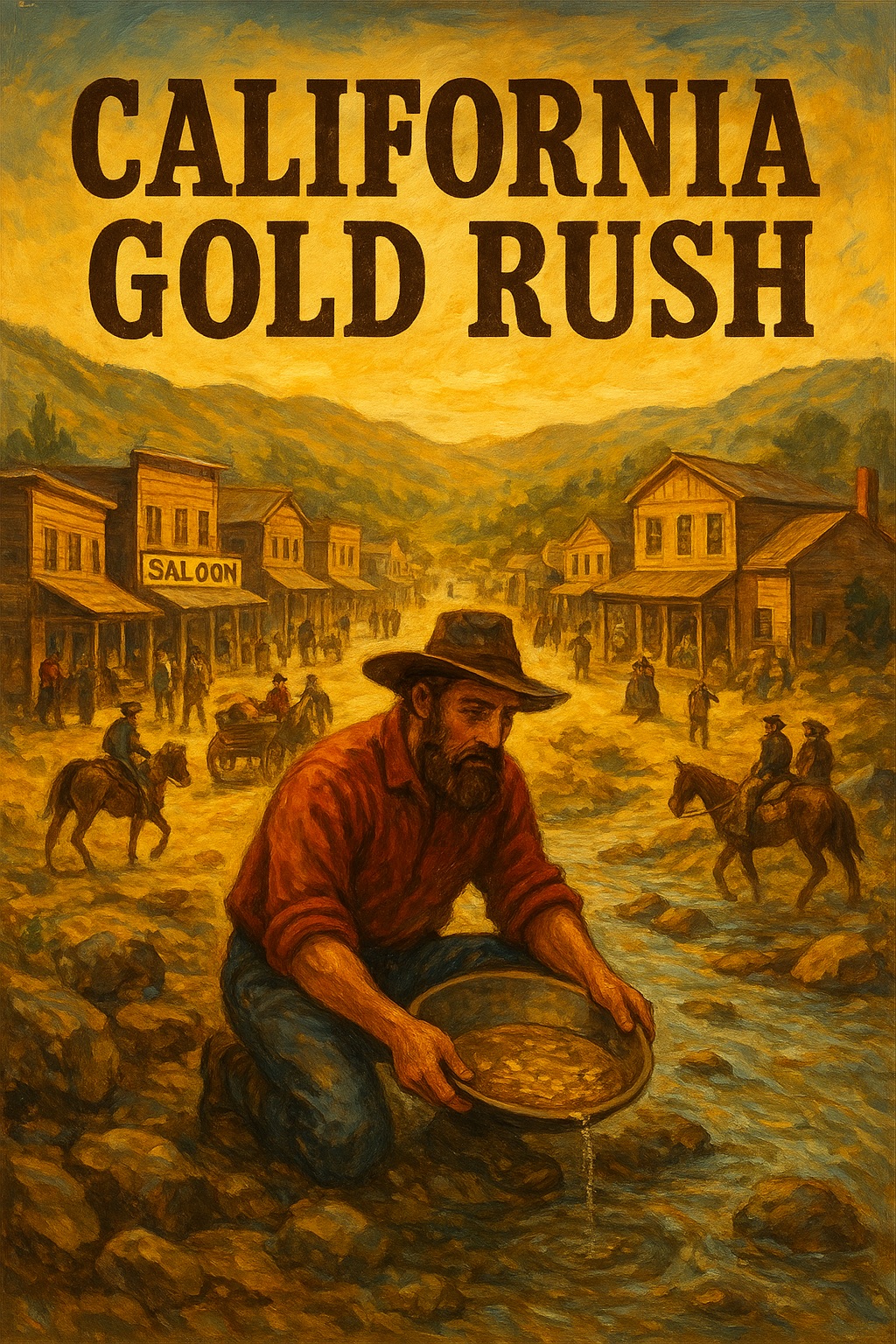
The California Gold Rush of 1848–1855 triggered one of the most dramatic economic transformations in U.S. history. What began as a local discovery at Sutter’s Mill rapidly drew hundreds of thousands of prospectors, entrepreneurs, and immigrants from around the world. This unprecedented influx of people created instant demand for food, tools, clothing, housing, transportation, and banking services—quickly turning small settlements like San Francisco into bustling economic hubs. As gold poured into circulation, the region experienced rapid urbanization, high wages, and a surge in land speculation, laying the foundation for a more diversified and complex regional economy.
Beyond the immediate boom, the Gold Rush fundamentally reshaped California’s long-term economic trajectory. Mining profits funded infrastructure projects, including roads, railways, and ports, that connected the region to national and international markets. Agricultural and industrial enterprises expanded to meet the needs of the growing population, while financial institutions emerged to manage newfound wealth and investment. The rapid economic growth also accelerated California’s path to statehood in 1850, integrating it into the U.S. economy just as the nation was industrializing. Ultimately, the Gold Rush transformed California from a remote frontier into a dynamic economic powerhouse whose influence continues to shape the American economy today.