
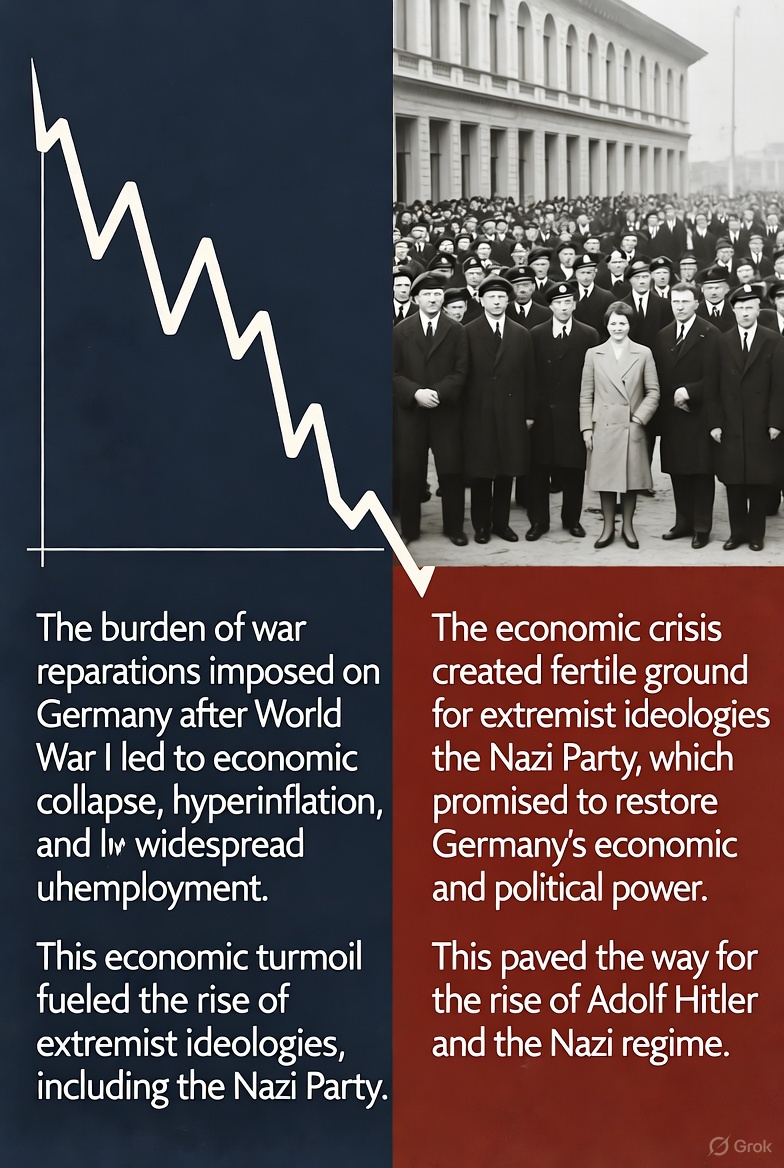
Germany’s post-WWI reparations crippled its economy, fueling hyperinflation, political unrest, and the rise of extremism in the 1920s.
After World War I, Germany faced severe economic and political turmoil due to the harsh reparations imposed by the Treaty of Versailles in 1919. The Allies demanded massive payments—initially 132 billion gold marks—crippling Germany’s economy. To meet these demands, the government printed vast amounts of money, causing hyperinflation in the early 1920s. Savings evaporated, unemployment soared, and the middle class was devastated. The Dawes Plan of 1924 and later the Young Plan attempted to ease the burden, but resentment toward the reparations persisted. Many Germans viewed the treaty as a national humiliation, fueling anger and distrust toward the Weimar Republic. Economic collapse and social unrest created fertile ground for extremist movements, particularly Adolf Hitler’s Nazi Party, which promised to restore national pride and reject the “Versailles Diktat.” Thus, the financial penalties intended to ensure peace ultimately contributed to the instability that led to World War II.