
Turkey’s economy thrives on manufacturing, agriculture, and tourism. It produces textiles, automotive, and electronics, with brands like Ford Otosan. Agriculture includes hazelnuts and cotton, while Istanbul and Antalya drive tourism. Emerging industries include defense technology, with drones like Bayraktar gaining global attention, and renewable energy, particularly wind and solar. Turkey’s strategic location bridges Europe and Asia, boosting trade. Despite inflation challenges, its young workforce and growing tech sector support resilience. Investments in green energy and digital infrastructure aim to diversify the economy, positioning Turkey as a regional hub for manufacturing and innovation.
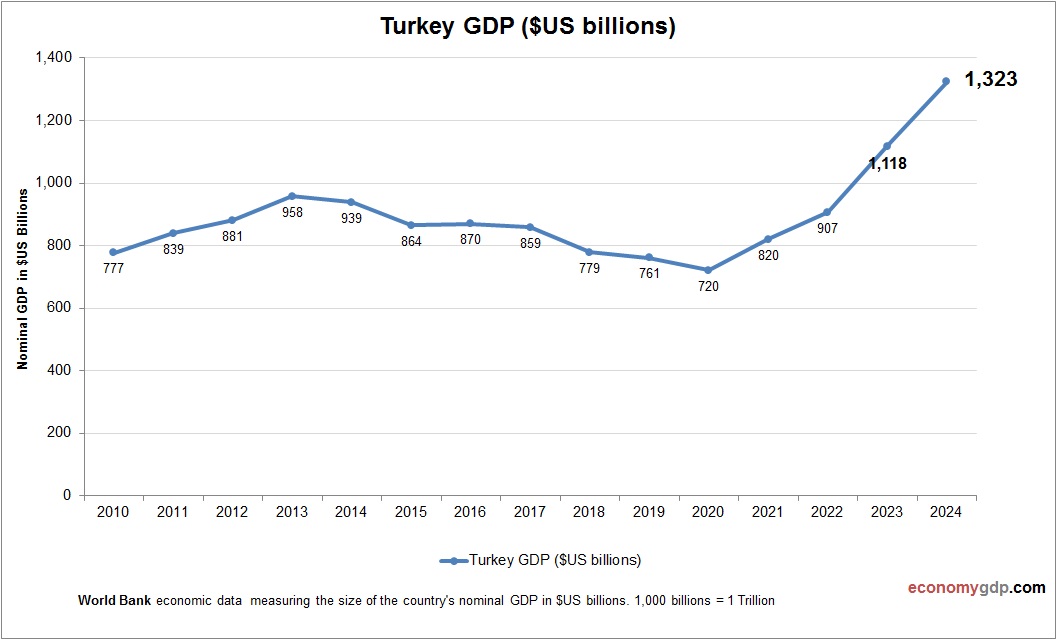
Turkey Economy Size
Turkey’s economy has a nominal GDP of around $900 billion. Manufacturing, agriculture, and tourism drive its size, with textiles and automotive as key exports. Its strategic location boosts trade. Despite inflation challenges, investments in defense tech and renewable energy support GDP growth, positioning Turkey as a regional economic player bridging Europe and Asia, with a growing focus on technology and infrastructure development. See Turkey GDP.
Turkey Purchasing Power Parity (PPP)
Turkey’s economy has a PPP GDP of about $3.2 trillion. Manufacturing, agriculture, and tourism drive its size, with low costs amplifying purchasing power. Textiles and automotive exports boost its PPP GDP, supported by its strategic location. Investments in defense tech and renewable energy enhance its scale, positioning Turkey as a regional economic player with strong growth potential despite inflation challenges.

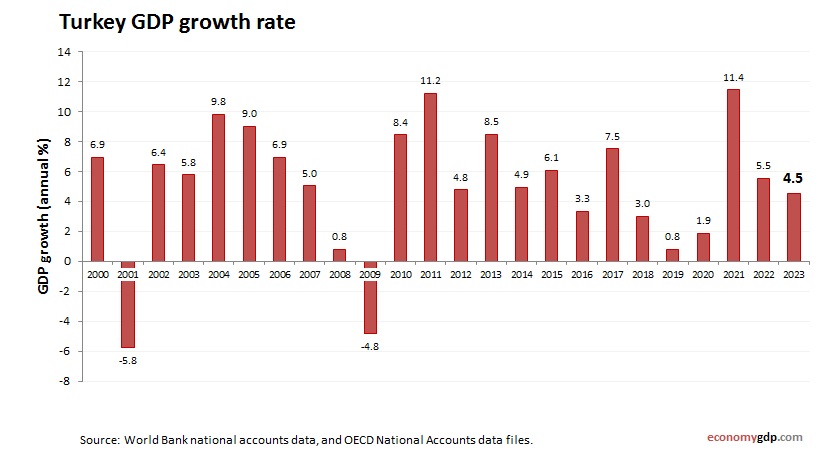
Turkey Growth Rate
Turkey’s economy is projected to grow at 2.5% in 2025. Manufacturing, agriculture, and tourism fuel expansion, with textiles and automotive exports driving growth. Defense tech, like drones, adds value, though high inflation and currency volatility pose risks. Investments in renewable energy and infrastructure support momentum, positioning Turkey as a regional economic player bridging Europe and Asia, with growth potential tempered by macroeconomic challenges.
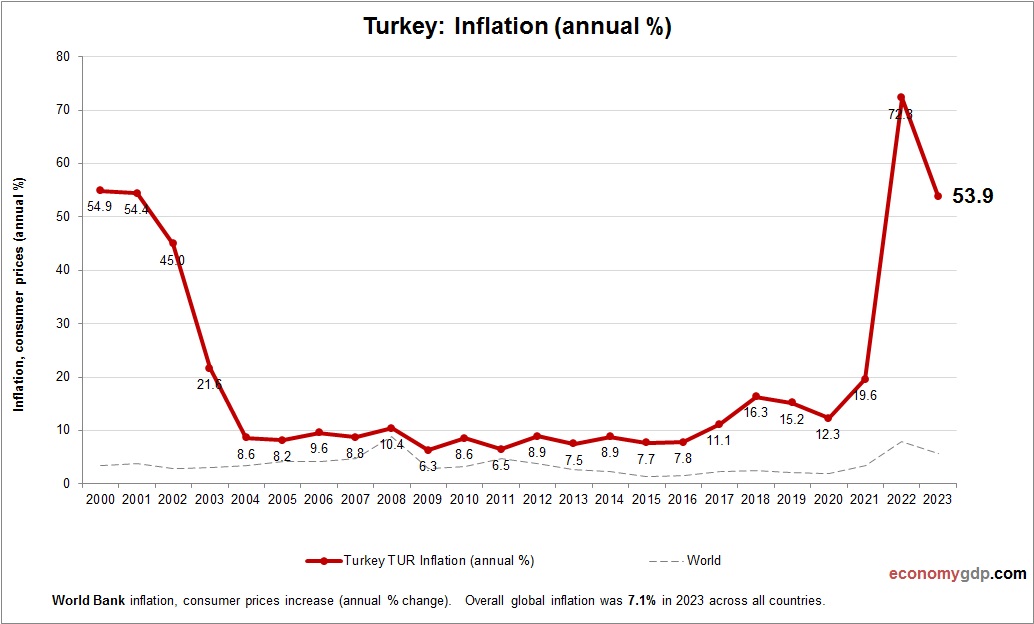
Turkey Inflation
The Turkey’s inflation is very high at 24.4%, driven by currency depreciation and import reliance. High energy and food costs, plus loose fiscal policy, exacerbate price spikes. Strong manufacturing and tourism demand add pressure, while monetary tightening struggles to curb inflation. Structural reforms and export growth offer some relief, but persistent macroeconomic instability keeps inflation elevated, challenging economic stability.