
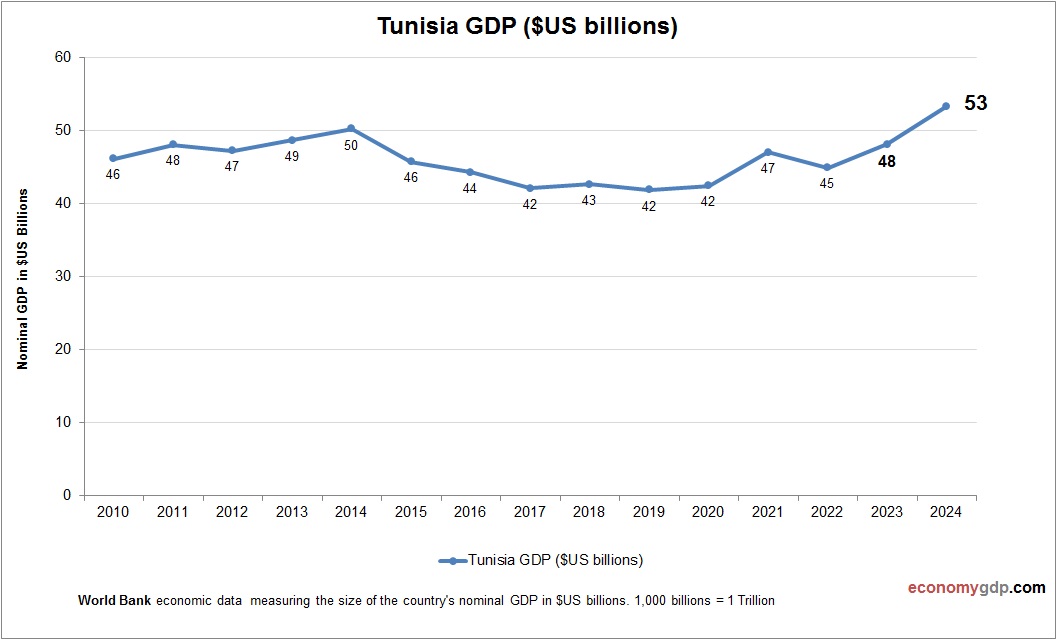
Tunisia's economy is diversified, with GDP contributions from agriculture, mining, manufacturing, and services. Olive oil, textiles, and phosphates are key exports, while tourism remains vital despite political and economic instability. Services, including finance and IT, are growing as the country invests in digital transformation. Tunisia faces challenges such as unemployment and fiscal deficits, yet its skilled workforce and Mediterranean location offer trade advantages. Efforts to improve competitiveness, attract foreign investment, and expand renewable energy are part of long-term growth strategies. Tunisia's GDP reflects both its resilience and the pressures of reform needs.
World Bank GDP economic data: 2010-2024. Last updated Oct 2025.
Tunisia GDP Statistics by Year
| Year | GDP Size (in billions $) |
| 2025 (projected) | 56 |
| 2024 | 53 |
| 2023 | 48 |
| 2022 | 45 |
| 2021 | 47 |
| 2020 | 42 |
| 2019 | 42 |
| 2018 | 43 |
| 2017 | 42 |
| 2016 | 44 |
| 2015 | 46 |
| 2014 | 50 |
| 2013 | 49 |
| 2012 | 47 |
| 2011 | 48 |
| 2010 | 46 |