
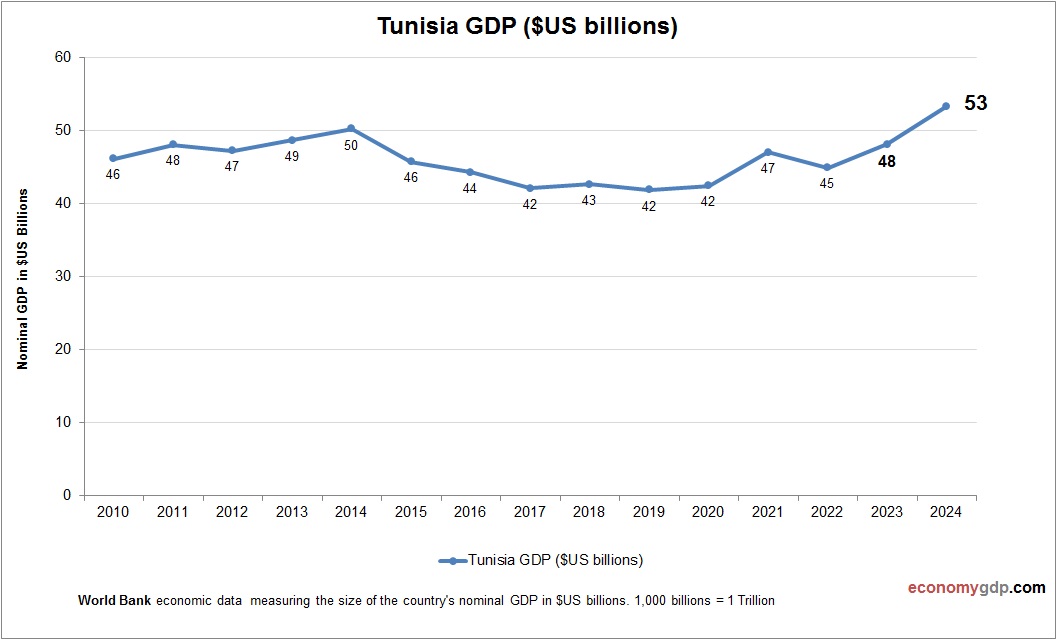
Tunisia’s economy, valued at $45 billion, is driven by services, particularly tourism, which contributes 10% to GDP, and textiles, a key export. Agriculture, employing 15%, produces olives and dates. Industry, including automotive components, supports trade with Europe. Emerging sectors include IT, with Tunis as a tech hub, and renewable energy (solar). Political instability and debt since 2011 challenge growth, but EU trade ties and a skilled workforce offer potential. Reforms and investment in green tech are critical to diversification.
Tunisia Economy Size
Tunisia’s economy, at $45 billion, is mid-sized, with services and industry driving its GDP, limited by political instability. See Tunisia GDP.
Tunisia Purchasing Power Parity (PPP)
Tunisia’s economy has a PPP GDP of $150 billion, over three times its $45 billion nominal GDP, due to low costs for tourism and industry. PPP per capita is around $12,000, indicating modest purchasing power. Domestic pricing supports local markets, but political instability limits PPP-driven economic growth.

Tunisia Growth Rate
The economic growth rate is 2.8% in 2024, driven by tourism and textiles. Olive exports and EU trade support growth, but political instability and debt pose risks. Renewable energy contributes, while infrastructure investments drive resilience, positioning the economy for modest progress in North Africa.

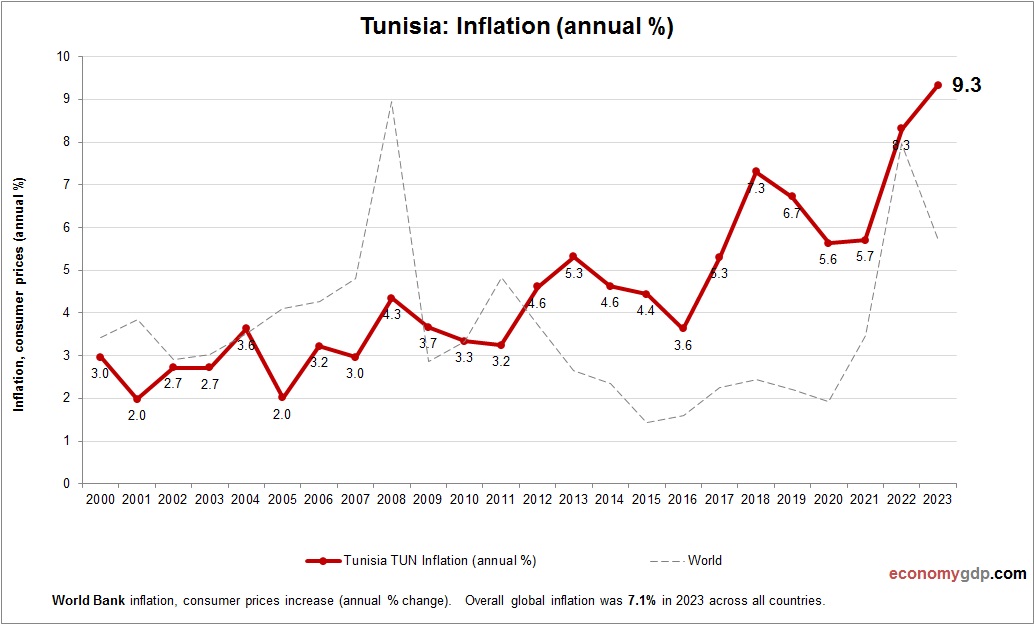
Tunisia Inflation
Tunisia’s inflation rate is around 7% in 2024, driven by rising global food and energy prices. Currency depreciation increases import costs, while agricultural disruptions from drought add pressure. Tourism and export demand fuel price rises, but monetary tightening and trade with Europe help moderate inflation in this challenged economy.