
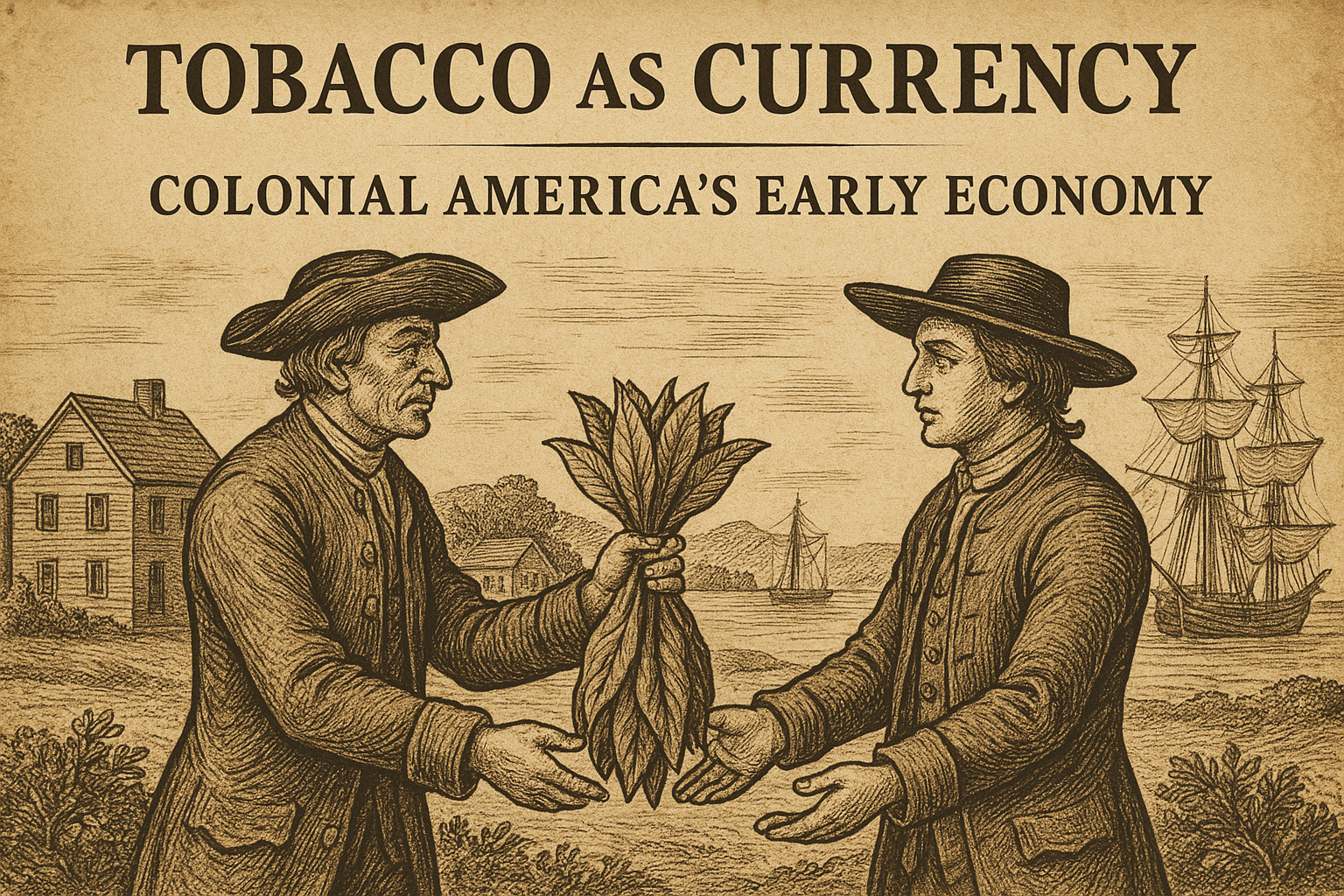
In Colonial America, tobacco played a vital role not just as a cash crop but as an actual form of currency that fueled the early economy. Especially in the 17th century, before stable coinage and banking systems existed, colonists in Virginia and Maryland used tobacco to pay for goods, taxes, and even fines. The crop’s consistent demand in Europe made it a reliable medium of exchange, with the value of transactions often measured in pounds of tobacco rather than money. Planters stored it in public warehouses where certificates could be traded much like modern banknotes. This system encouraged the growth of plantations, trade with England, and the import of labor, including indentured servants and enslaved Africans. Though this reliance on a single crop made the economy vulnerable to fluctuations in tobacco prices, it laid the foundation for the colonies’ mercantile prosperity and enduring global trade connections.