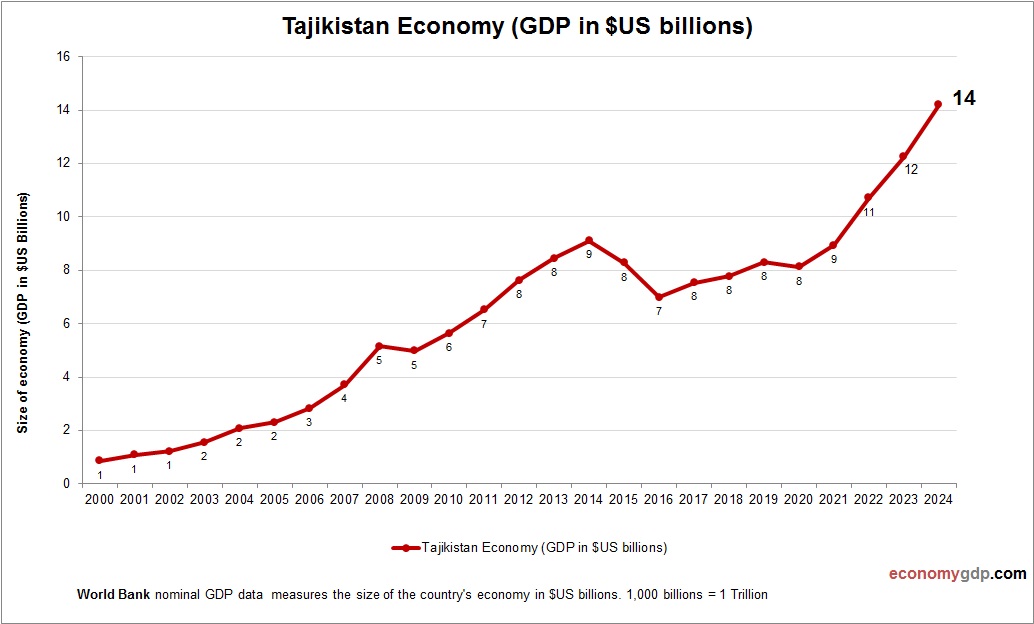
Tajikistan’s economy, worth $10 billion, relies on agriculture, employing 50% of the workforce, with cotton and fruits as key exports. Remittances (30% of GDP) from Russia are vital. Hydropower, from dams like Rogun, drives energy exports. Mining (gold, aluminum) and tourism, tied to Pamir Mountains, are emerging. Weak infrastructure and reliance on remittances pose risks, but trade with China via the Belt and Road Initiative supports growth. Diversification into renewables and textiles is needed to reduce dependence on external labor markets.
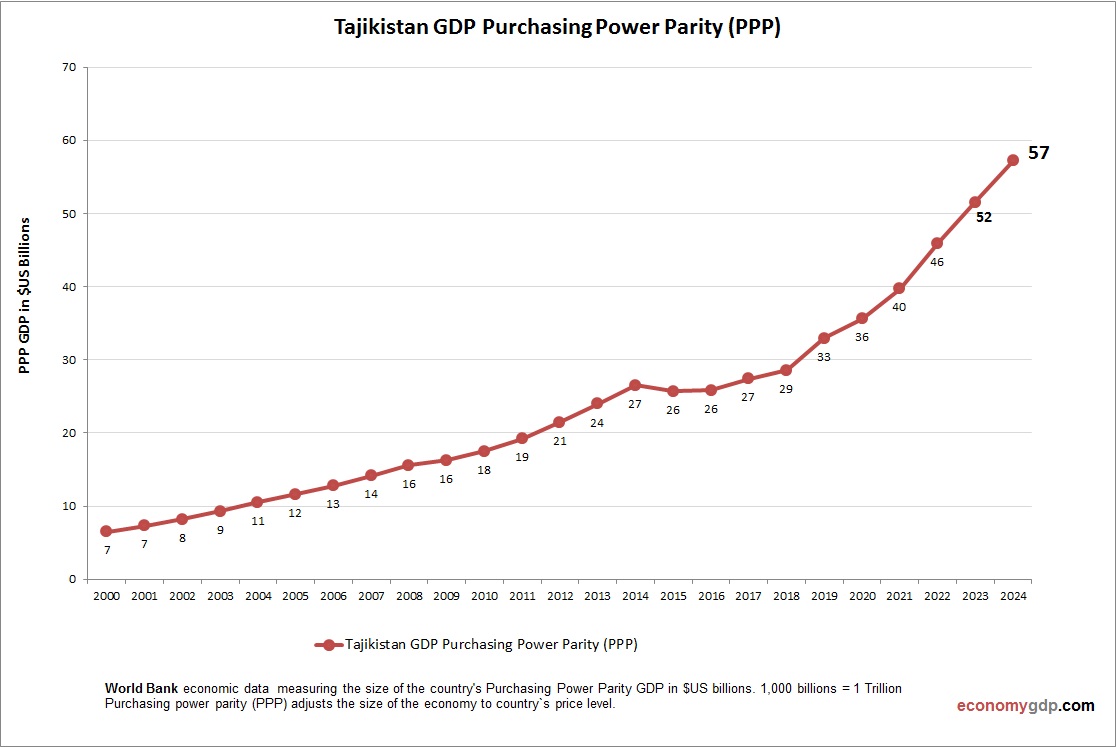
Tajikistan Economy Size
Tajikistan’s economy, valued at $10 billion, is small, with agriculture and remittances driving its GDP, constrained by infrastructure. See Tajikistan GDP.
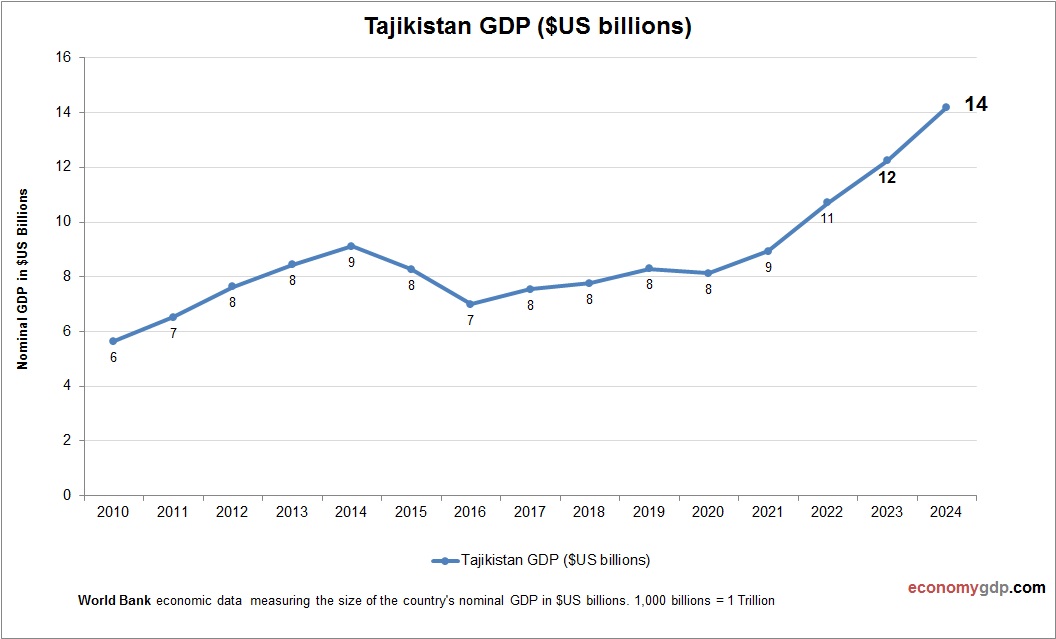
Tajikistan Purchasing Power Parity (PPP)
Tajikistan’s economy has a PPP GDP of $45 billion, over four times its $10 billion nominal GDP, driven by low costs for agriculture and remittances. PPP per capita is around $5,500, reflecting modest purchasing power. Domestic pricing boosts markets, but infrastructure limits broader PPP-driven economic growth.
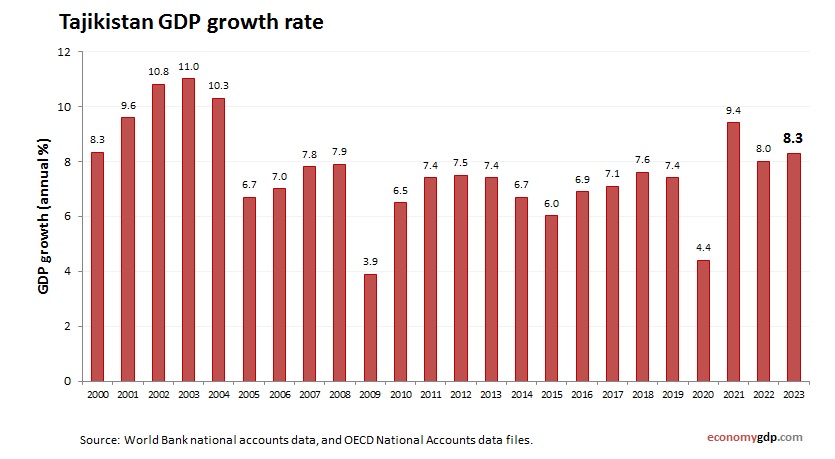
Tajikistan Growth Rate
The economic growth rate is 3.5% in 2024, fueled by agriculture and remittances. Cotton exports and infrastructure investments support growth, but poverty and infrastructure deficits pose risks. Hydropower contributes, while regional trade drives resilience, positioning the small economy for steady progress in Central Asia.
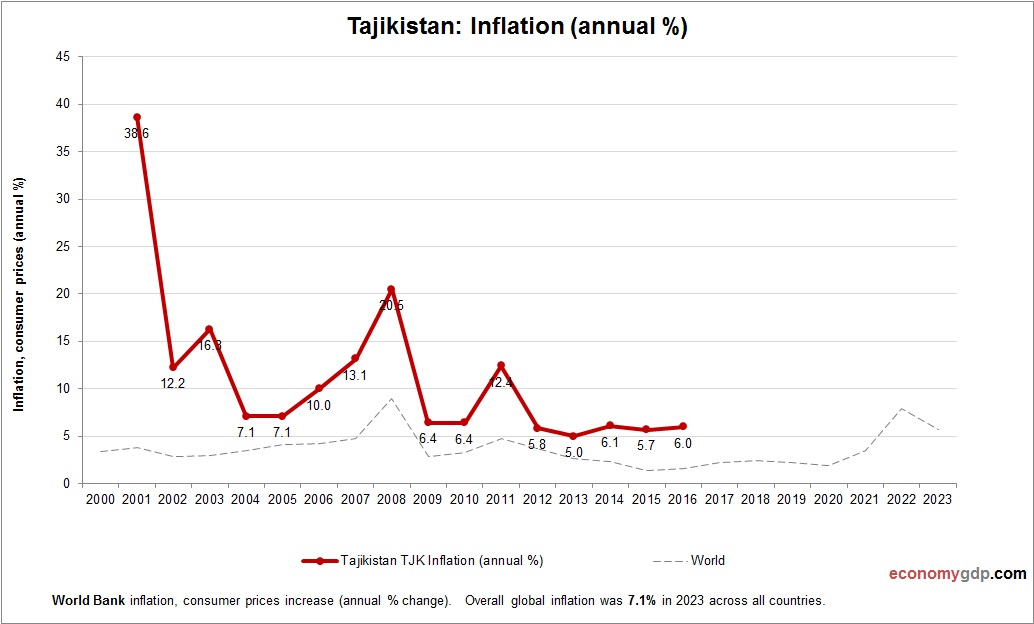
Tajikistan Inflation
Tajikistan’s inflation rate is about 5% in 2024, driven by rising global food and energy prices. Remittances and agricultural exports fuel demand, while currency depreciation raises import costs. Energy import reliance adds pressure, but tight monetary policy helps moderate inflation, though reliance on external funds sustains volatility.