Portugal’s economy, valued at $250 billion, is service-driven, with tourism accounting for 15% of GDP, leveraging Lisbon and Algarve. Manufacturing, including textiles and automotive components, and agriculture (wine, olives) are significant. Renewable energy, particularly wind and solar, contributes 50% of electricity. Emerging sectors include tech, with Lisbon as a startup hub, and green hydrogen projects. EU membership supports trade, but high public debt and an aging population pose challenges. Investment in innovation and sustainable tourism strengthens Portugal’s competitive edge.
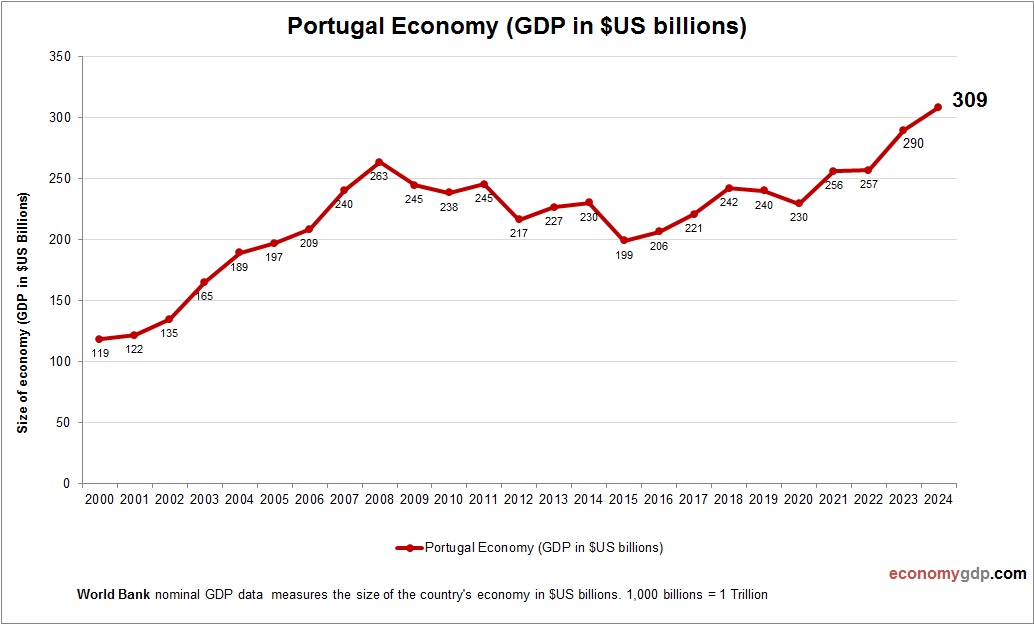
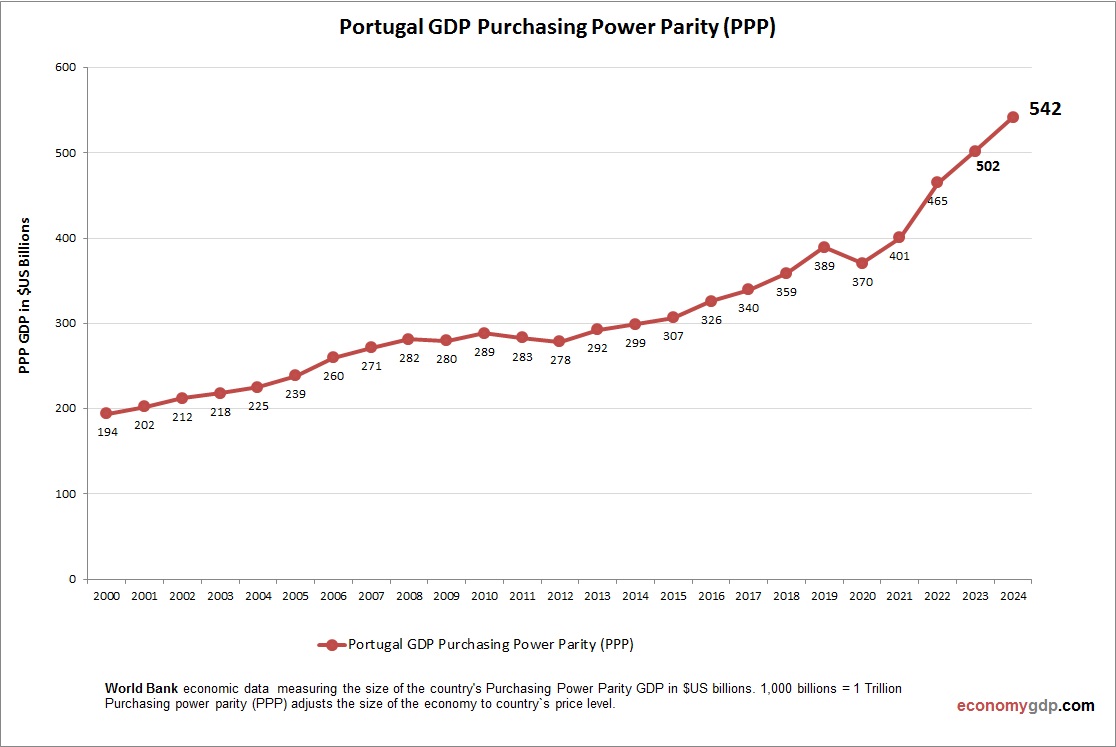
Portugal Economy Size
Portugal’s economy, at $250 billion, is mid-sized within the EU, with services and industry driving its GDP, supported by tourism. See Portugal GDP.
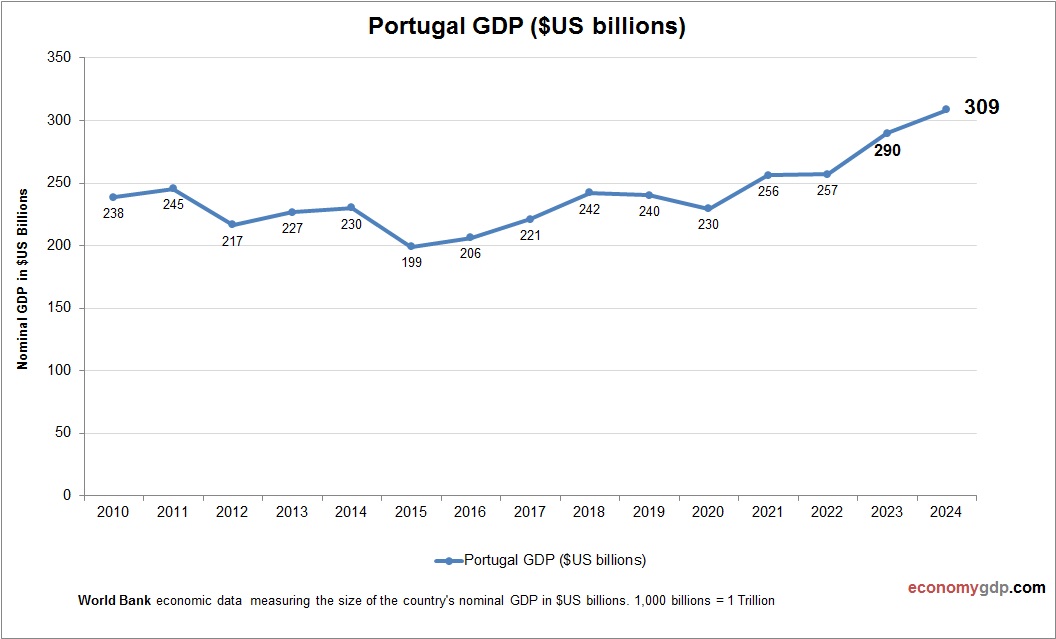
Portugal Purchasing Power Parity (PPP)
Portugal’s economy has a PPP GDP of $450 billion, nearly double its $250 billion nominal GDP, reflecting lower costs for tourism and services. PPP per capita is around $45,000, indicating strong purchasing power within the EU. Domestic pricing and trade amplify markets, supporting robust PPP-driven growth.
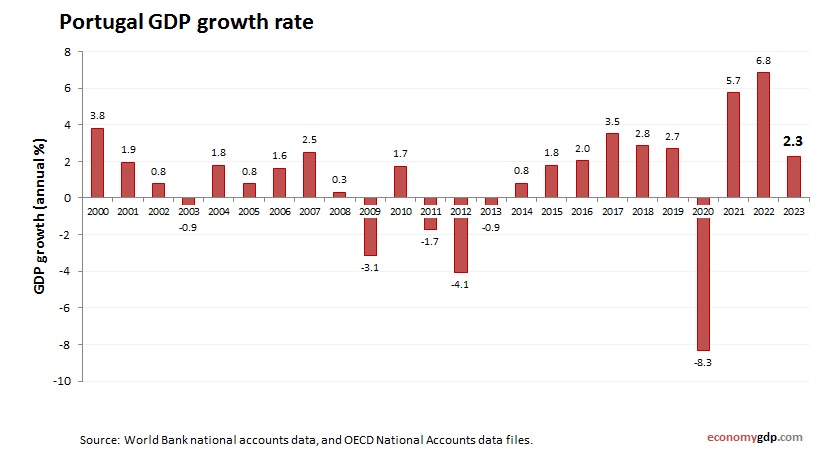
Portugal Growth Rate
The economic growth rate is 2.5% in 2024, fueled by tourism and manufacturing. EU integration and renewable energy support growth, but an aging population and high debt limit gains. Agriculture contributes modestly, while infrastructure investments drive resilience, positioning the economy for steady progress within the EU.
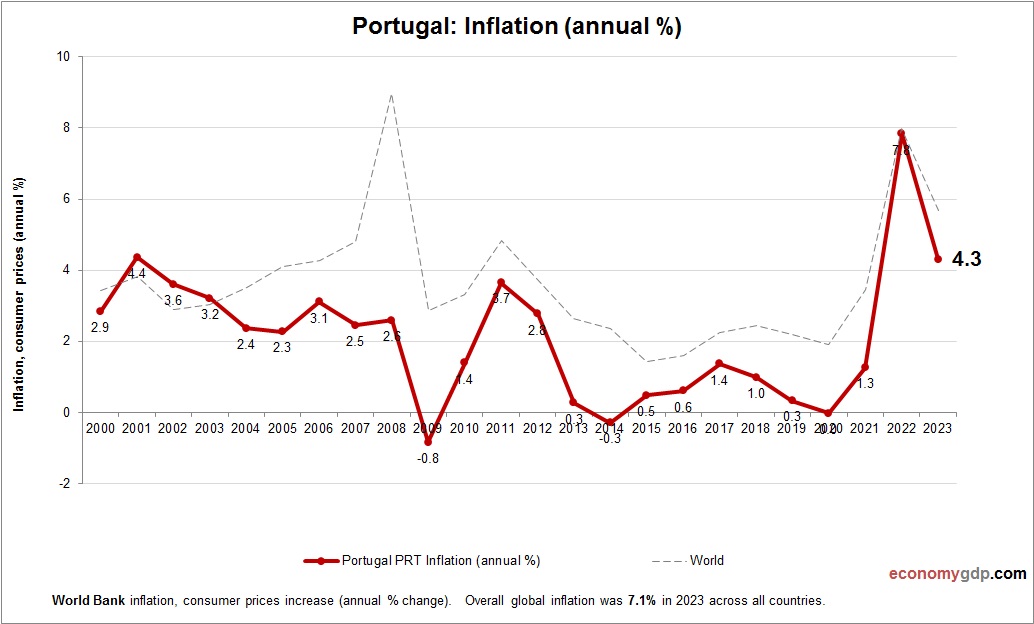
Portugal Inflation
Portugal’s inflation rate is approximately 2.5% in 2024, driven by rising energy and food import costs within the EU. Tourism recovery and wage growth increase service prices, while global supply chains remain strained. Eurozone monetary tightening and stable governance help keep inflation moderate, though import reliance poses risks.