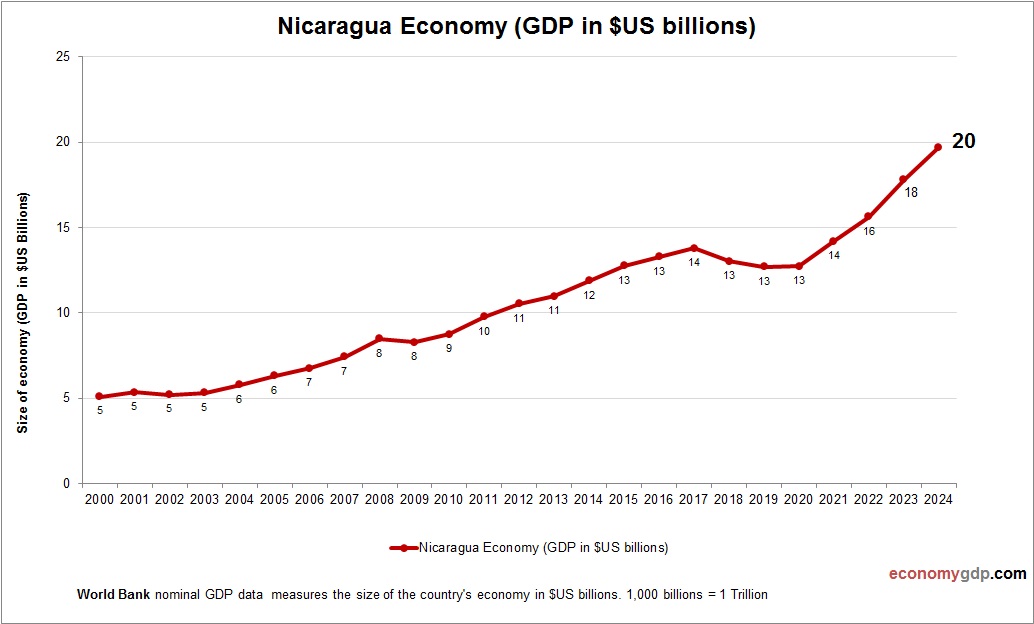
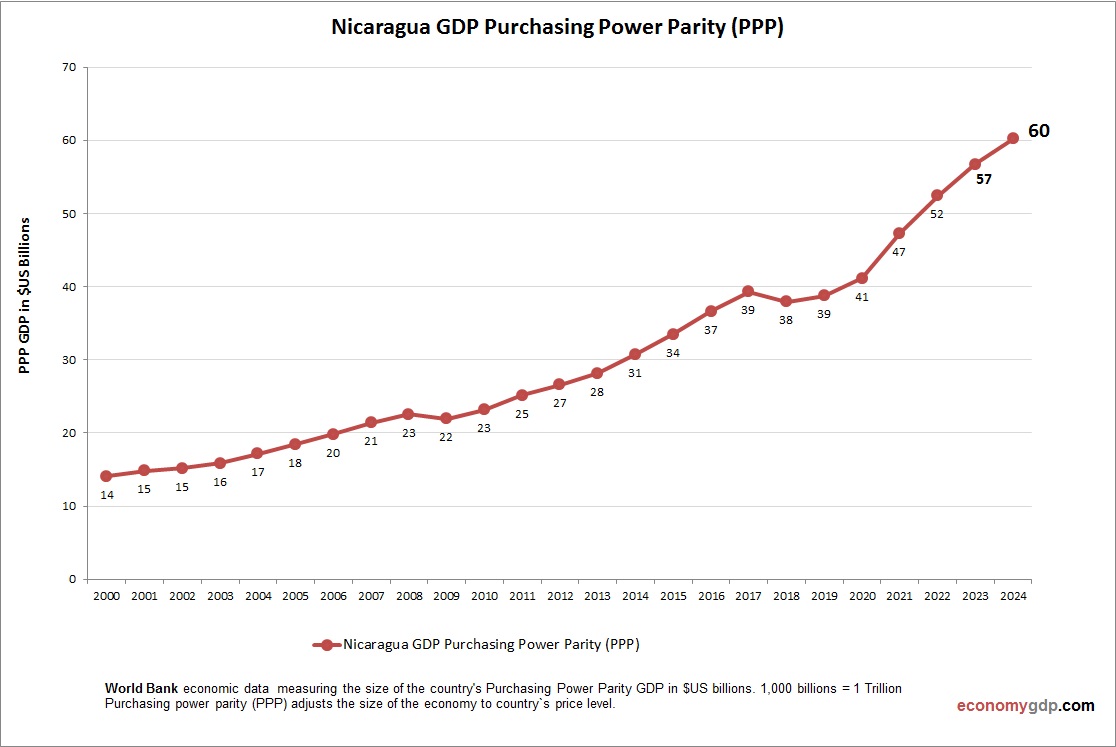
Nicaragua’s economy, worth $15 billion, depends on agriculture, which employs 30% of the workforce and exports coffee, beef, and sugar. Textiles and manufacturing, driven by free trade zones, are key, contributing 20% to GDP. Tourism, tied to colonial cities and natural sites, is growing, as is renewable energy, with geothermal and wind projects. Political instability and sanctions since 2018 have slowed progress. Remittances (15% of GDP) provide stability. Infrastructure improvements and regional trade could boost growth, but governance issues remain a significant barrier.
Nicaragua Economy Size
Nicaragua’s economy, valued at $15 billion, is small, with agriculture and textiles driving its GDP, constrained by political challenges. See Nicaragua GDP.
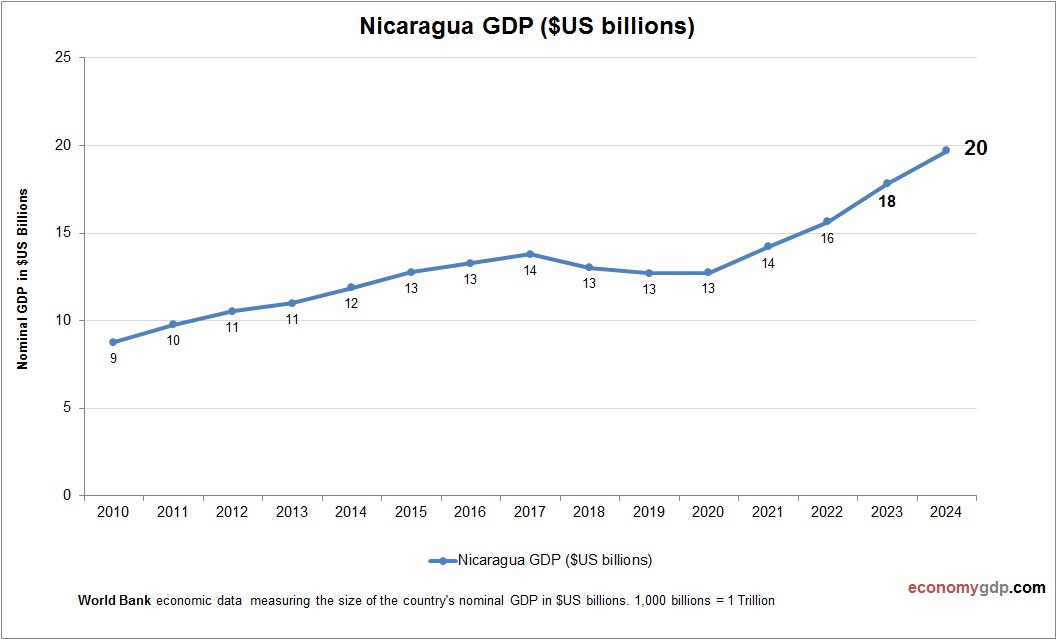
Nicaragua Purchasing Power Parity (PPP)
Nicaragua’s economy has a PPP GDP of $50 billion, over three times its $15 billion nominal GDP, due to low costs for agriculture and textiles. PPP per capita is around $7,000, reflecting modest purchasing power. Domestic pricing supports local markets, but political instability limits broader PPP-driven economic gains.
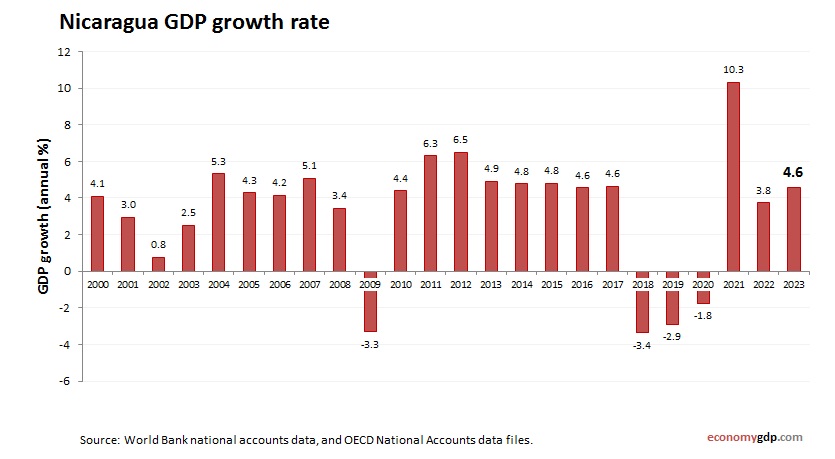
Nicaragua Growth Rate
The economic growth rate is 2.0% in 2024, driven by agriculture and textiles. Coffee exports and remittances support growth, but political instability and sanctions limit gains. Infrastructure deficits and poverty pose risks, while regional trade drives resilience, positioning the small economy for modest progress.
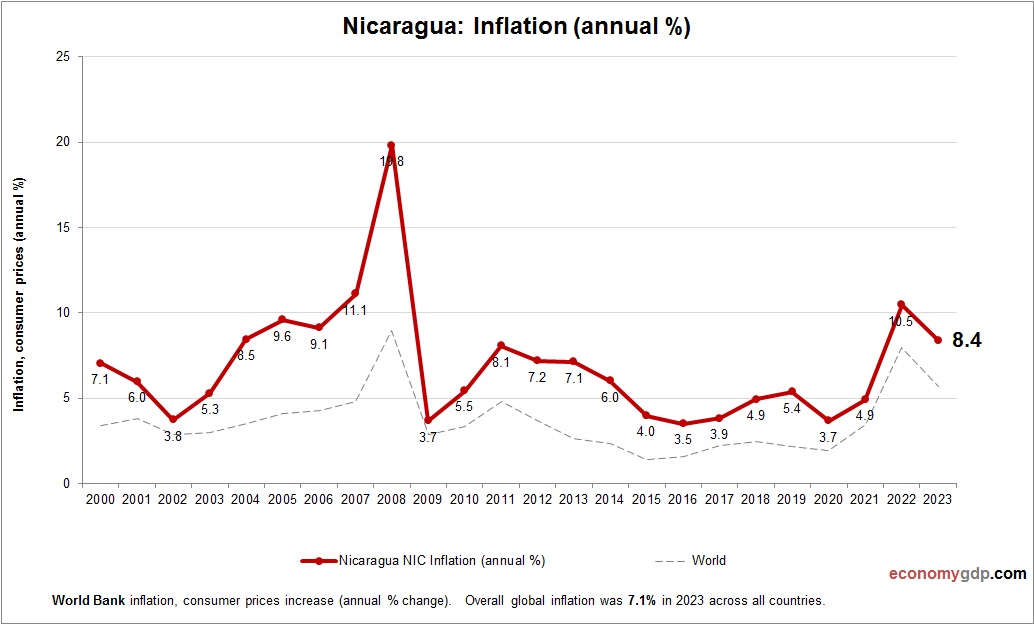
Nicaragua Inflation
Nicaragua’s inflation rate is about 5% in 2024, driven by rising global food and fuel prices. Remittances and agricultural exports increase demand, while currency depreciation adds pressure. Political instability disrupts supply chains, sustaining volatility. Monetary tightening helps moderate inflation, though import reliance poses ongoing risks in this small economy.