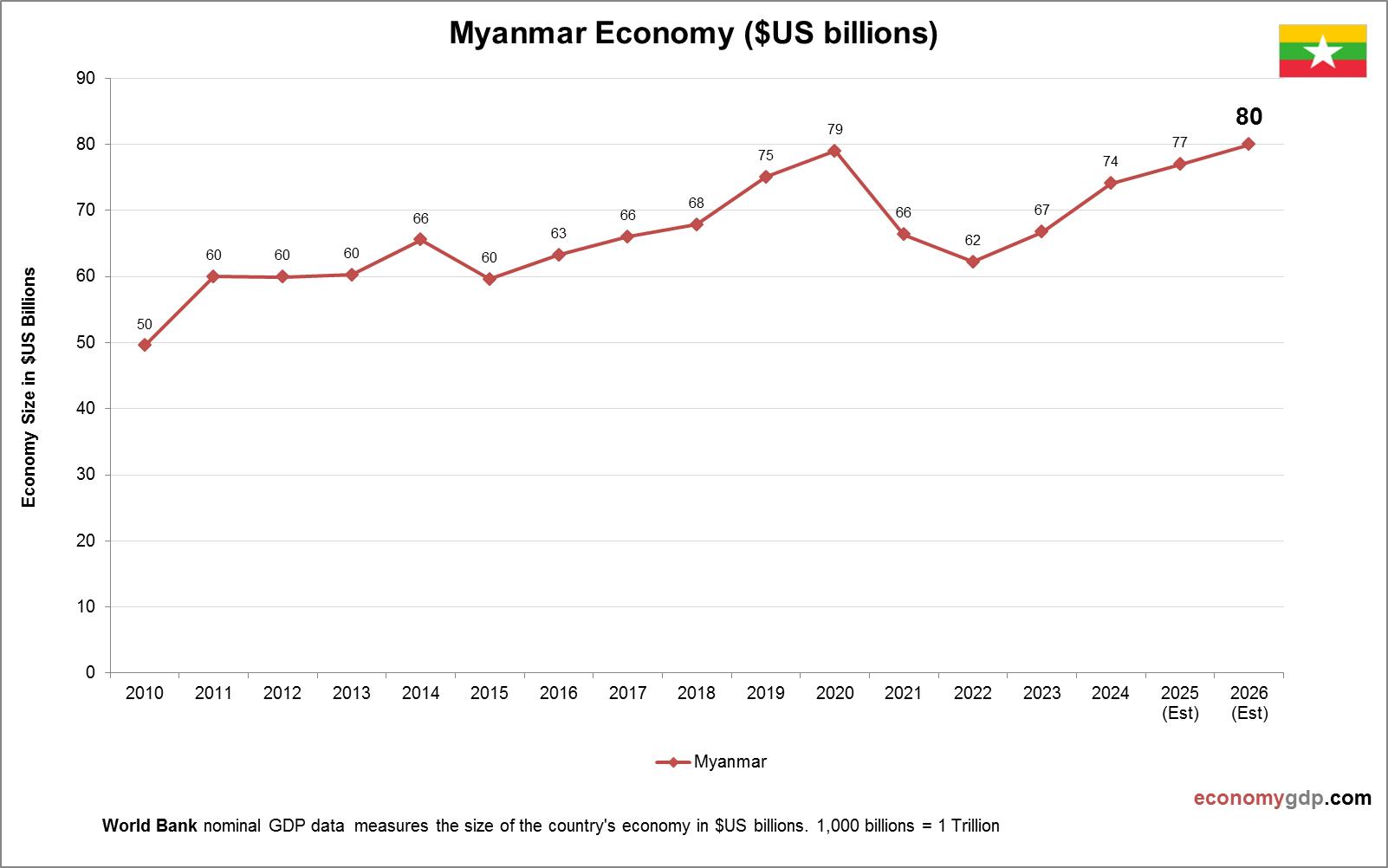
Myanmar’s economy, worth around $65 billion, relies heavily on agriculture, which employs 50% of the workforce and produces rice, pulses, and teak. Garment manufacturing is a key export sector, though disrupted by political instability since 2021. Natural gas and jade mining are significant, with gas exports to China and Thailand. Emerging sectors include tourism, tied to cultural sites like Bagan, and telecoms, with growing mobile penetration. Sanctions, conflict, and infrastructure deficits limit growth, but Myanmar’s strategic location and resources offer long-term potential if stability improves.
Myanmar Economy Size
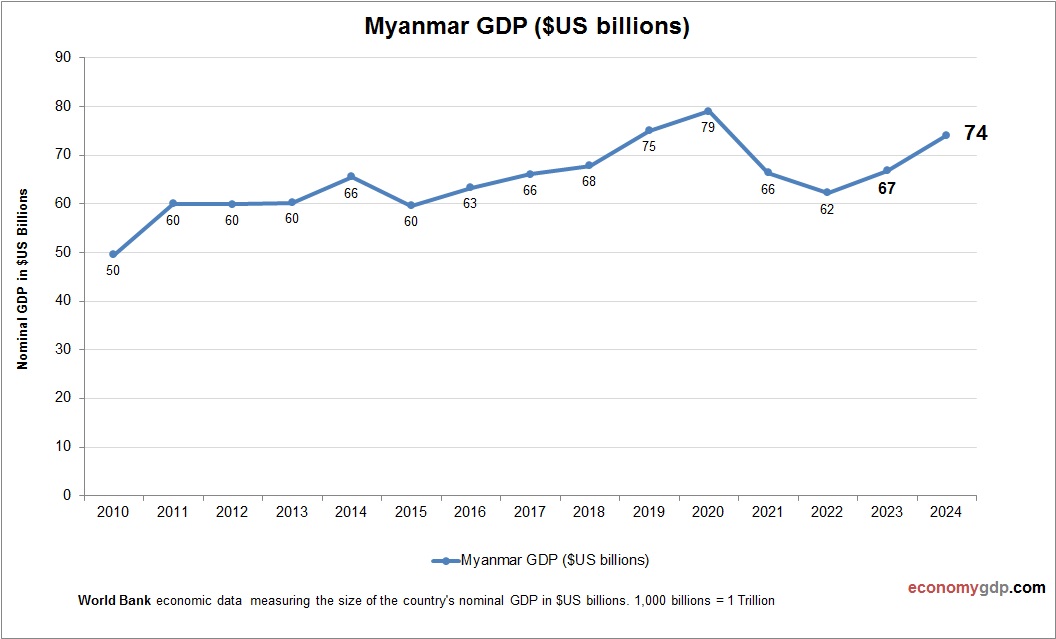
Myanmar’s economy, worth $65 billion, is mid-sized but disrupted, with agriculture and gas driving its GDP, limited by political instability. See Myanmar GDP.
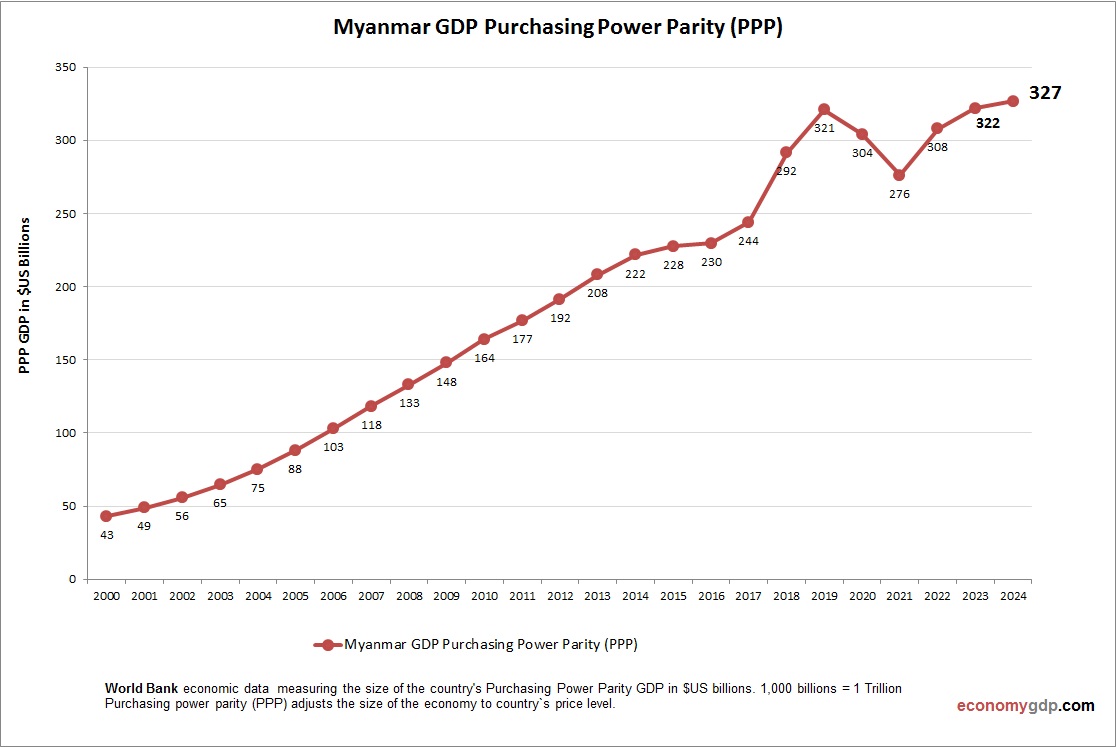
Myanmar Purchasing Power Parity (PPP)
Myanmar’s economy has a PPP GDP of $260 billion, four times its $65 billion nominal GDP, due to low costs for agriculture and gas. PPP per capita is around $5,000, indicating modest purchasing power. Domestic pricing supports local markets, but political instability severely constrains PPP-driven economic growth.
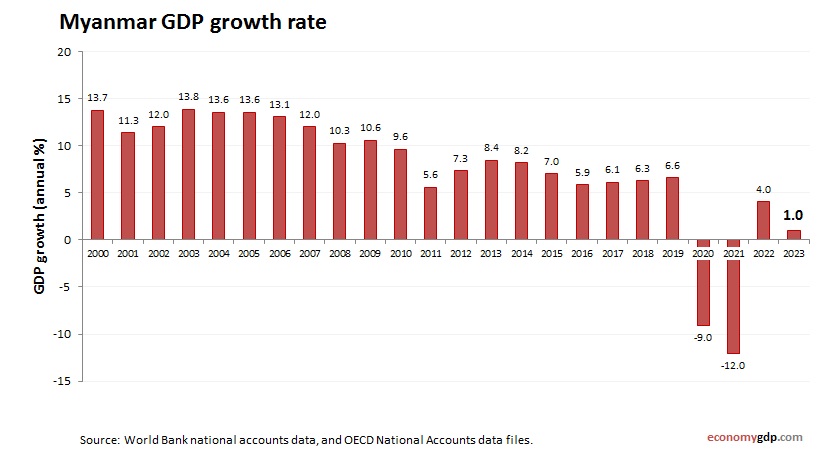
Myanmar Growth Rate
The economic growth rate is 2.5% in 2024, driven by agriculture and garments. Informal trade and remittances support growth, but political instability and sanctions limit gains. Tourism contributes modestly, while infrastructure deficits constrain resilience, positioning the economy for modest recovery if stability improves.
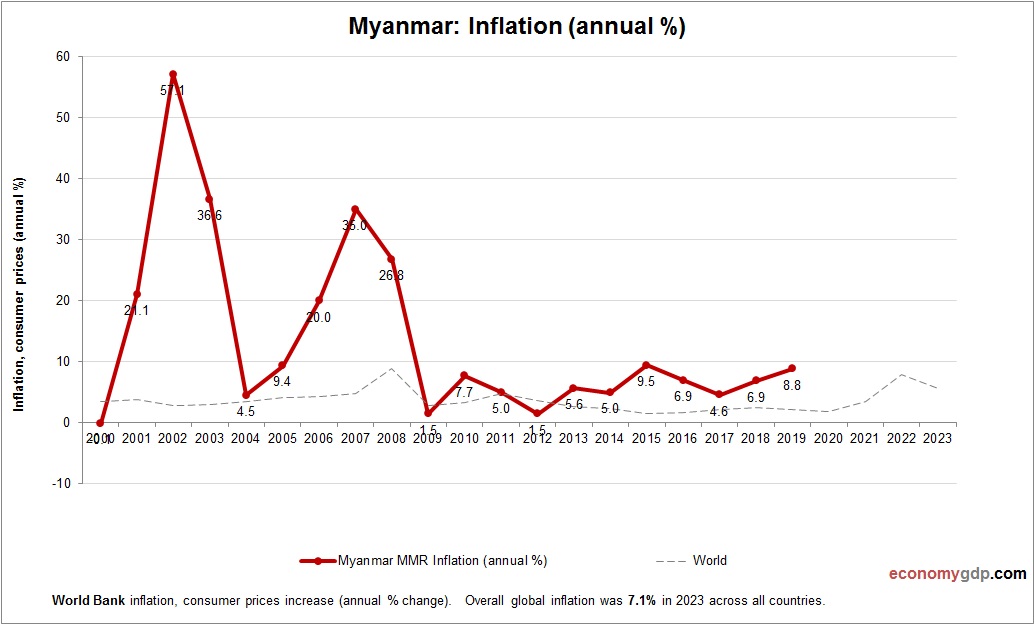
Myanmar Inflation
Myanmar’s inflation rate is around 15% in 2024, driven by political instability and currency depreciation. Supply chain disruptions and import reliance for food and fuel increase costs, while conflict affects agriculture. Monetary mismanagement fuels demand, with limited policy tools sustaining high inflation in this unstable economy.