The Mauritius economy thrives on tourism, financial services, and textiles. Sugarcane and offshore banking are key, while luxury resorts attract global visitors. A stable political climate and business-friendly policies draw investment, but reliance on external markets poses risks. Efforts to diversify into technology and renewable energy aim to sustain growth, with Mauritius positioning itself as a gateway for African investment. Income inequality and climate vulnerabilities remain challenges.
Mauritius Economy Size
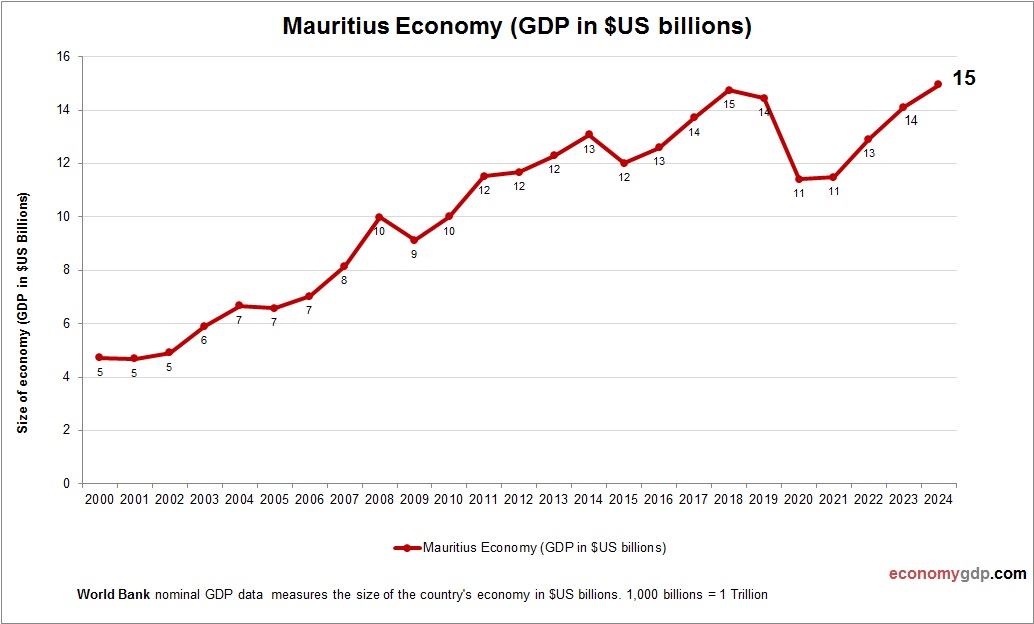
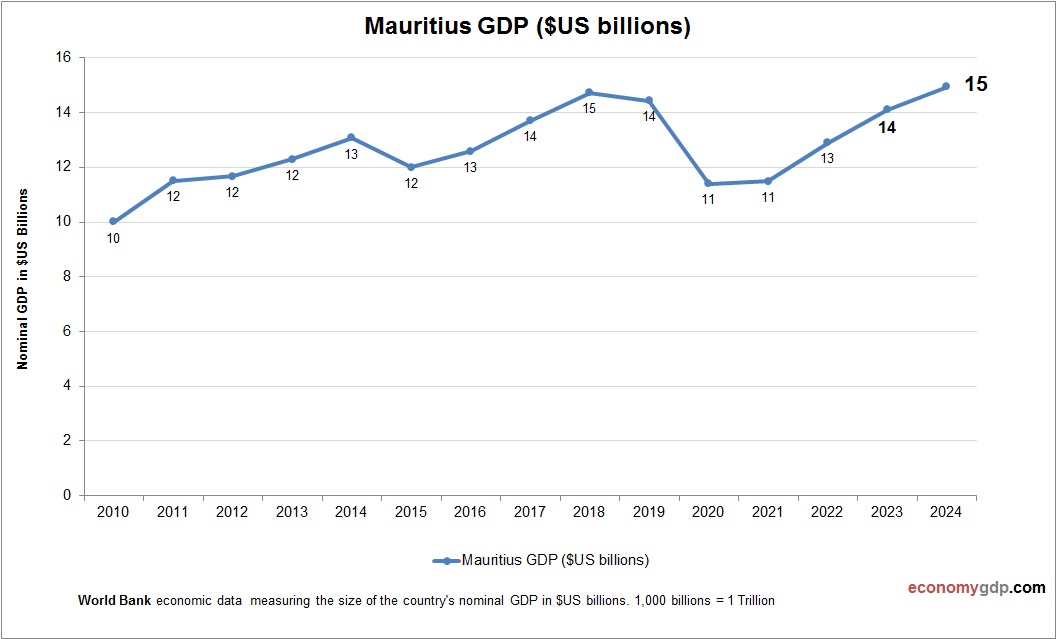
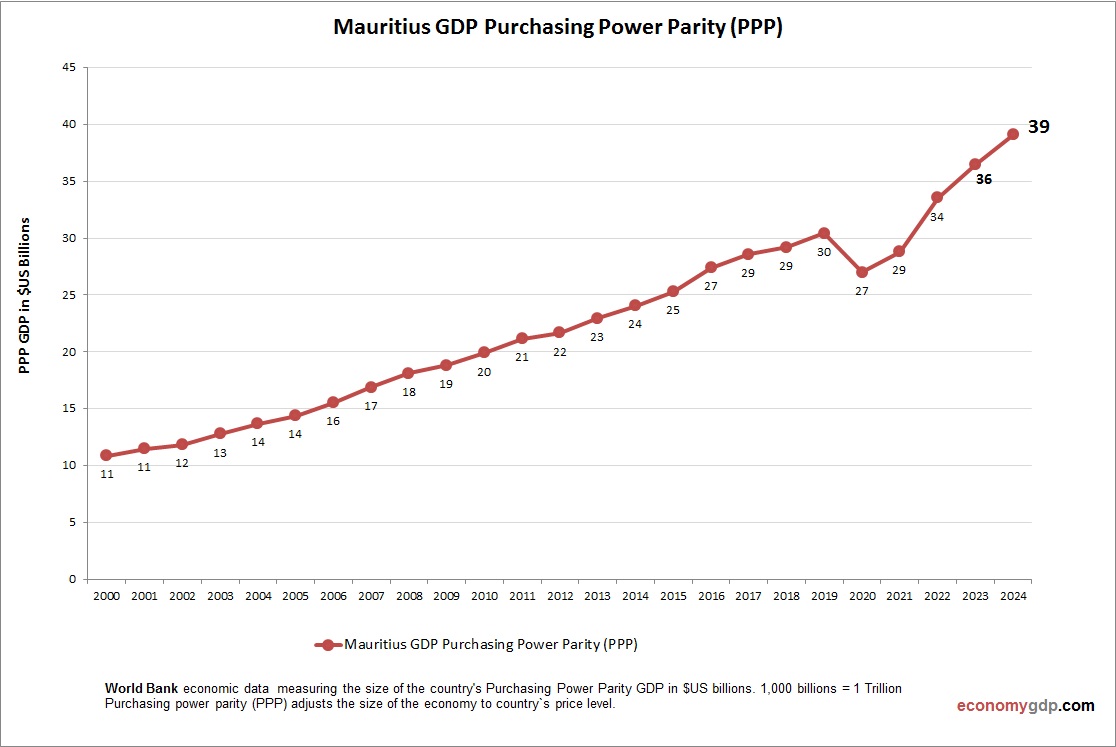
Mauritius economy, at $13 billion, is small but stable, with tourism and finance driving its GDP, supporting high per capita income. See Mauritius GDP.
Mauritius Purchasing Power Parity (PPP)
Mauritius economy has a PPP GDP of $35 billion, nearly triple its $13 billion nominal GDP, due to low costs for tourism and finance. PPP per capita is around $27,000, reflecting strong purchasing power. Domestic pricing boosts markets, with diversification amplifying PPP-driven growth in this small economy.
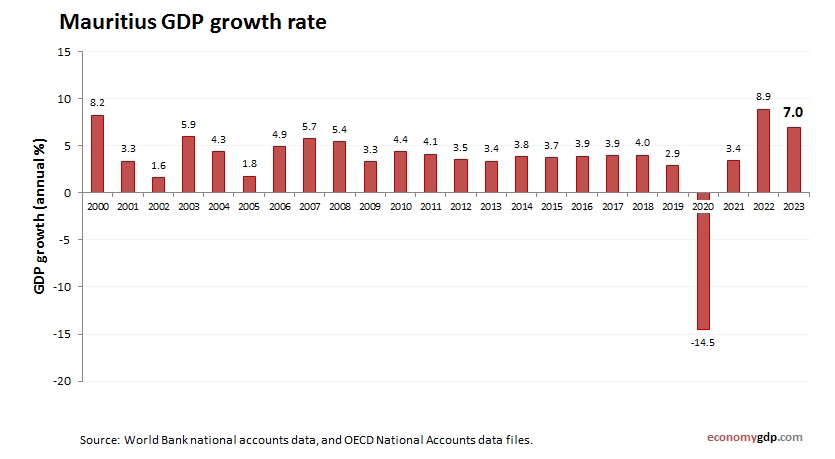
Mauritius Growth Rate
The economic growth rate is 3.0% in 2024, fueled by tourism and financial services. Stable governance and trade with Europe support growth, but reliance on services and import costs pose risks. Agriculture contributes modestly, while digital innovation drives resilience, positioning the small economy for steady progress.
Mauritius Inflation
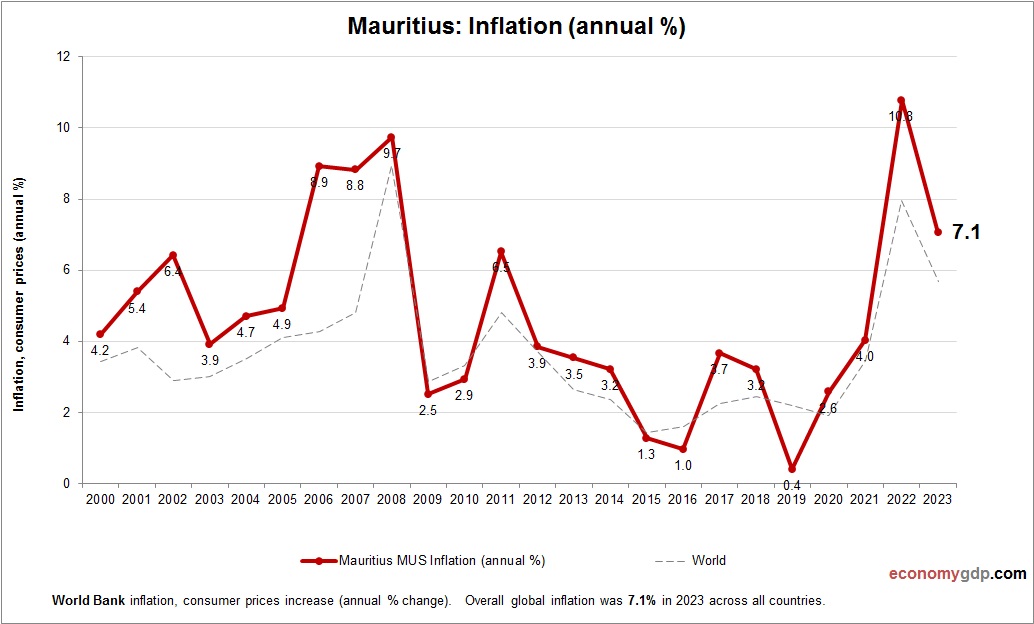
Mauritius inflation rate is approximately 4% in 2024, driven by rising global food and fuel prices in this import-dependent economy. Tourism recovery increases service costs, while strong financial services fuel demand. Currency stability and monetary tightening help moderate inflation, though reliance on imports sustains price volatility in this small market.