The Curacao economy depends on tourism, oil refining, and financial services. As a Caribbean hub, it attracts cruise ships and visitors, while offshore banking benefits from tax advantages. The oil sector, tied to Venezuelan imports, faces uncertainty, and diversification is limited. High living costs and unemployment pose challenges, with efforts to expand renewable energy and digital services underway. Economic stability relies on tourism recovery and regional trade partnerships.
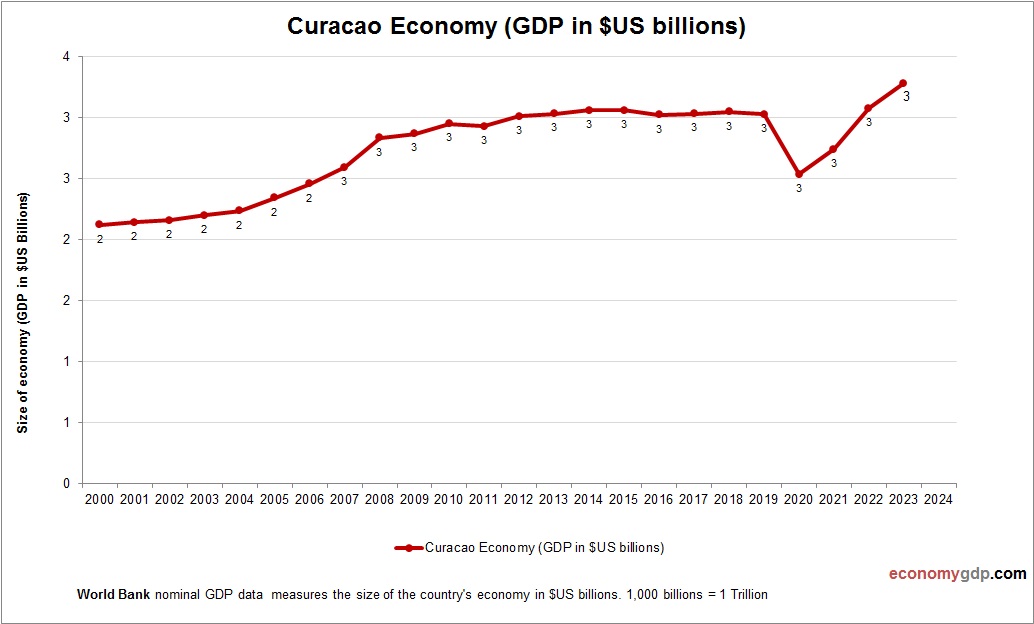
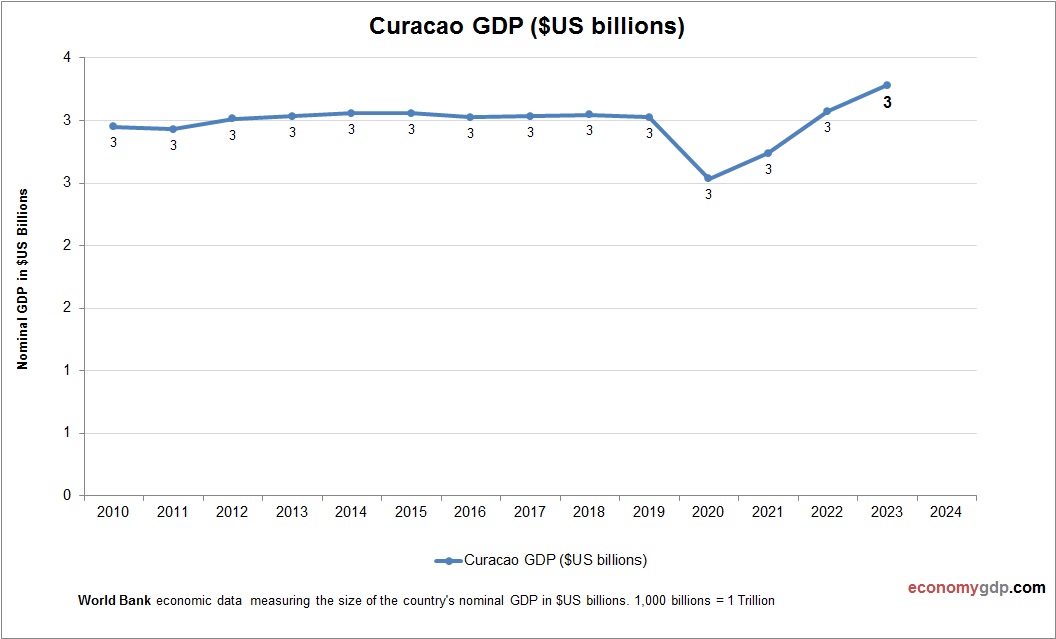
Curacao Economy Size
Curacao’s economy, at $3 billion, is small, driven by tourism and offshore finance. Its GDP reflects a service-based model, with high per capita income. See Curacao GDP.
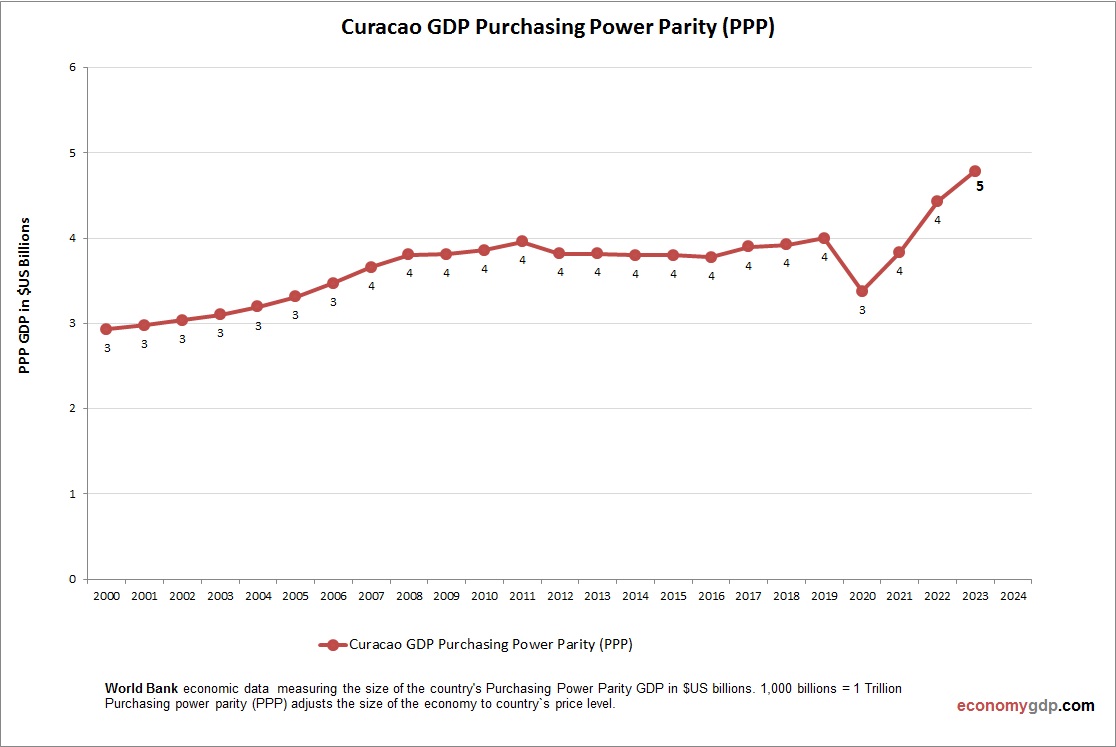
Curacao Purchasing Power Parity (PPP)
Curacao’s economy has a PPP GDP of $5 billion, above its $3 billion nominal GDP, due to moderate costs for tourism and finance. PPP per capita is about $30,000, reflecting strong purchasing power. The service-based economy benefits from cost advantages, but its small size and import reliance limit broader PPP impacts.
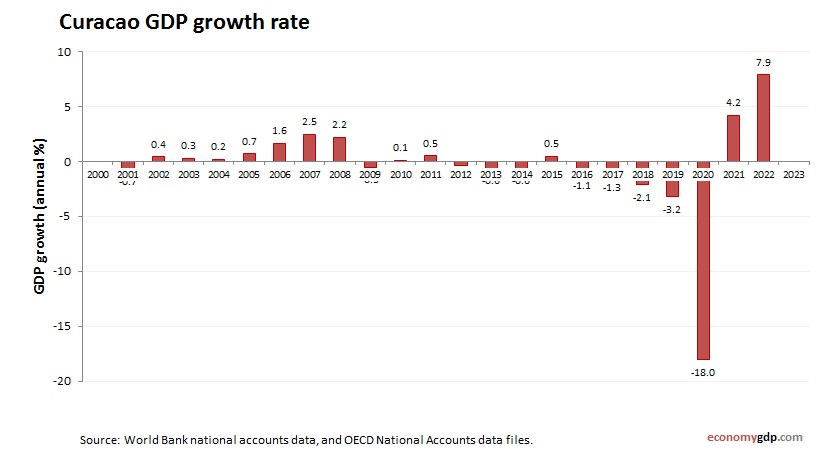
Curacao Growth Rate
The economic growth rate is 2.0% in 2024, driven by tourism and financial services. Increased cruise arrivals and offshore banking support growth, but high costs and import reliance limit gains. Investments in digital infrastructure and tourism enhance resilience, though the small market remains vulnerable to global economic slowdowns.
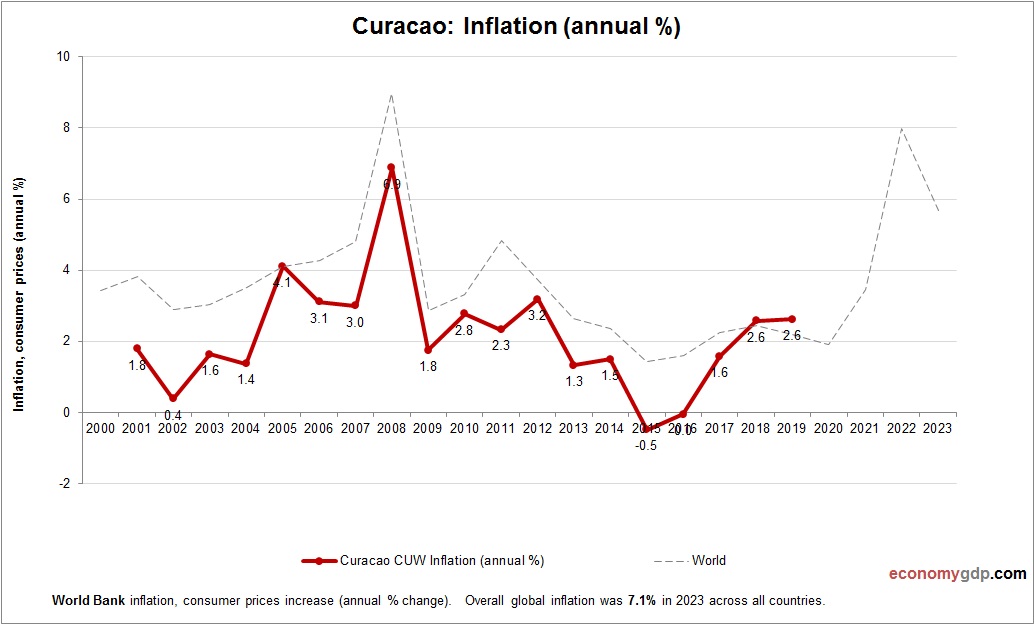
Curacao Inflation
Curacao’s inflation rate is around 3.5% in 2024, driven by rising global food and fuel prices in this import-dependent economy. Tourism recovery increases service costs, while the Netherlands Antillean guilder peg limits currency volatility. Limited local production adds pressure, but stable governance helps keep inflation moderate for a small economy.