Bermuda economy centers on international finance and tourism. As a global offshore financial hub, it hosts insurance and reinsurance industries, benefiting from tax advantages. Tourism, driven by beaches and historical sites, supports local businesses. High living costs and limited land constrain diversification, while global regulatory changes impact financial services. Investments in technology and sustainable tourism aim to maintain competitiveness in a high-income market.
Bermuda Economy Size
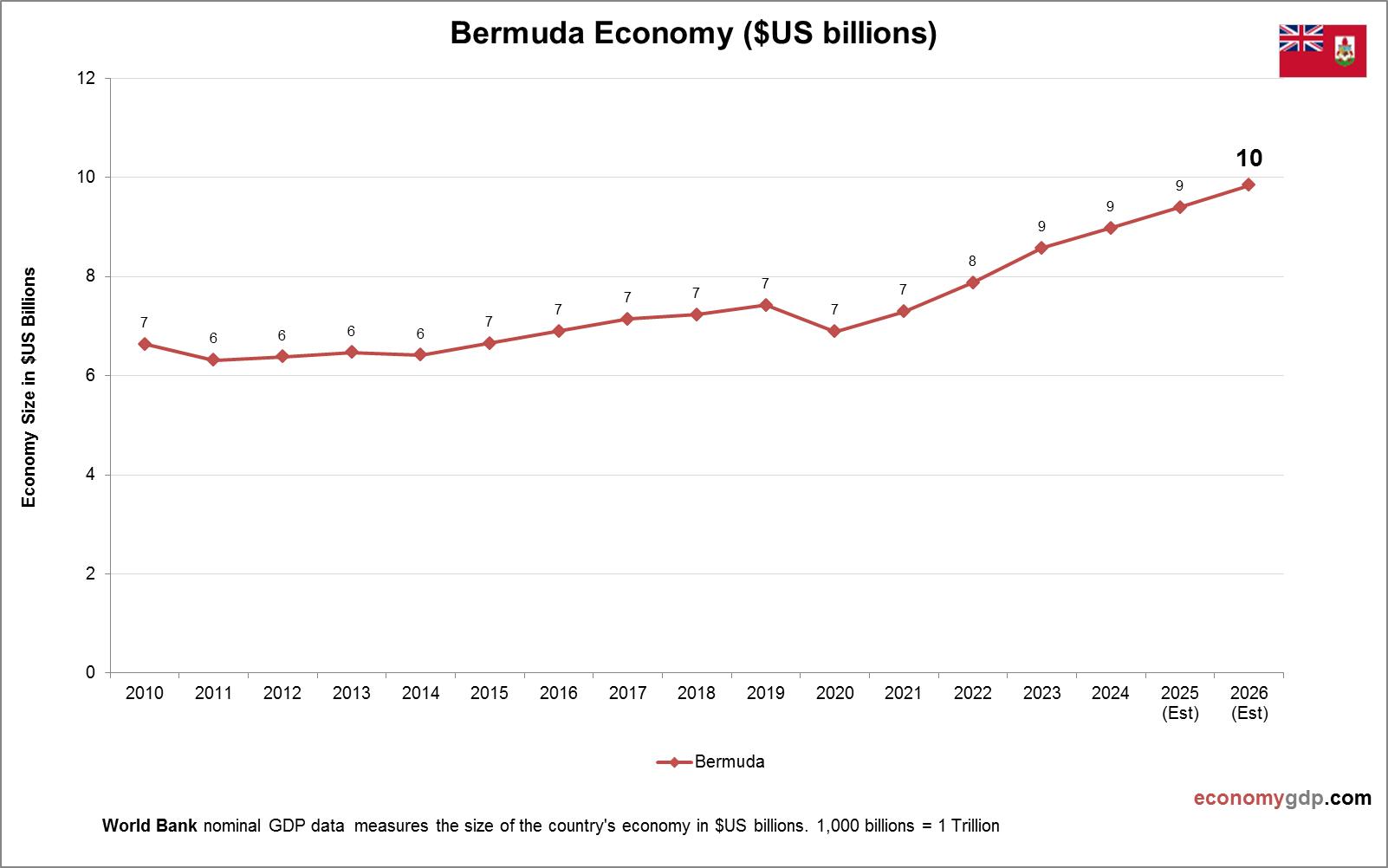
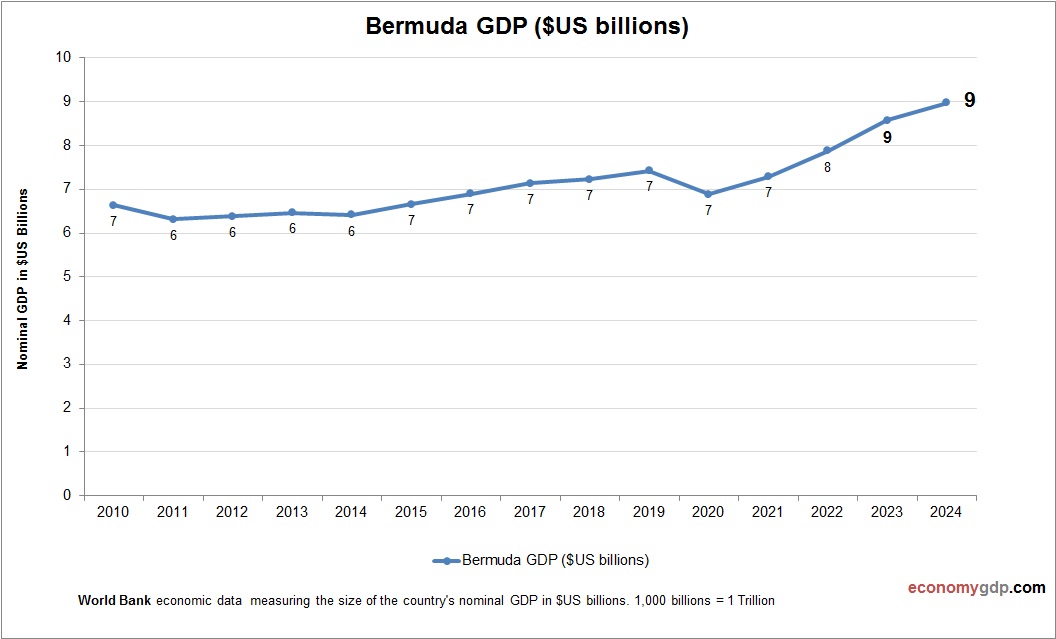
Bermuda’s economy, worth $7 billion, is small but affluent, driven by offshore finance and tourism. Its high per capita GDP reflects a concentrated, service-based economic model. See Bermuda GDP.
Bermuda Purchasing Power Parity (PPP)
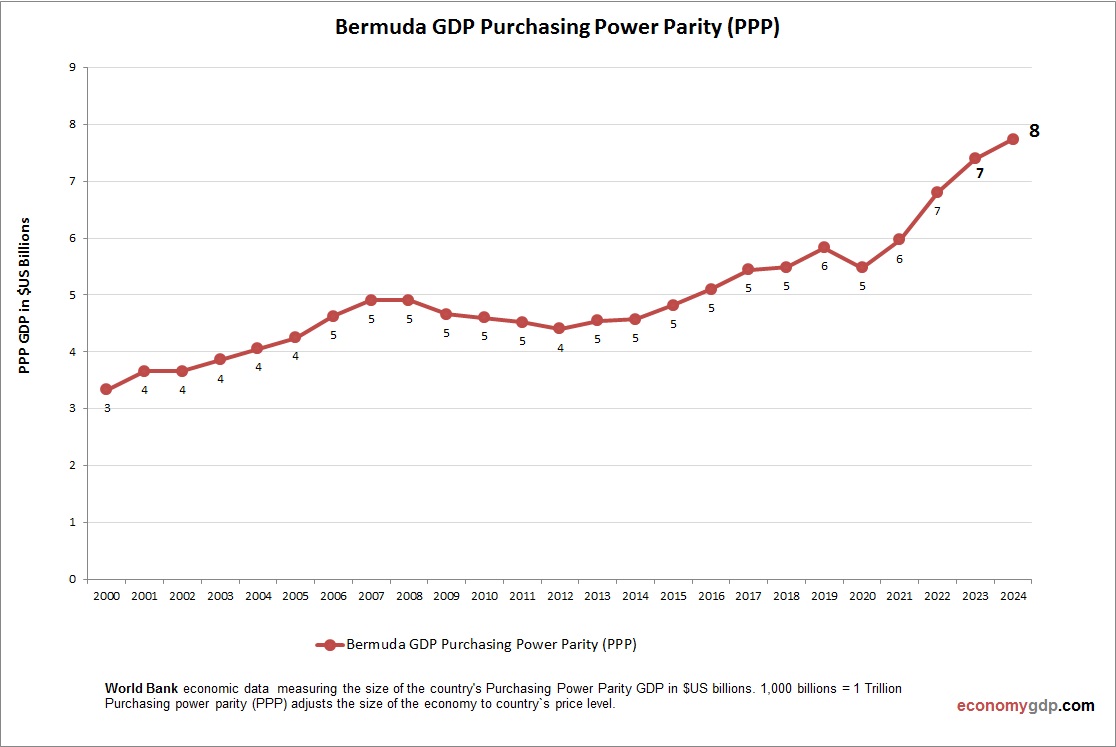
Bermuda’s economy has a PPP GDP of $8 billion, slightly above its $7 billion nominal GDP, reflecting high local costs offset by finance and tourism. PPP per capita is about $120,000, among the world’s highest, showcasing exceptional purchasing power. The small, affluent economy leverages cost advantages, but its size and import reliance limit broader PPP impacts.
Bermuda Growth Rate
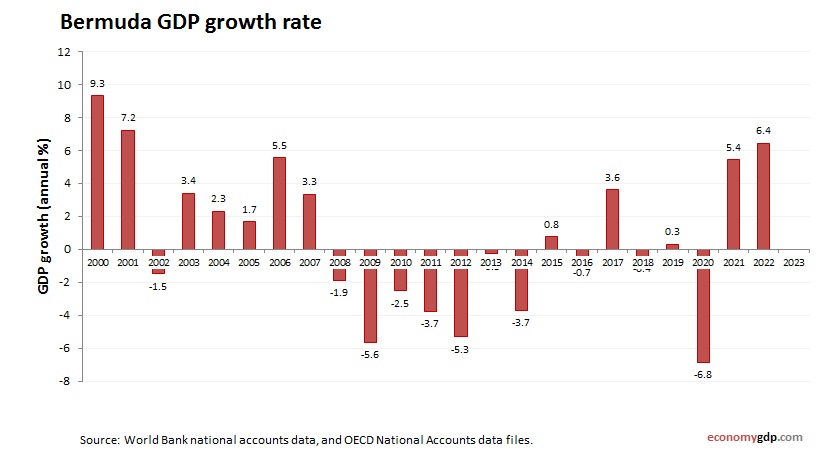
The economic growth rate is 1.5% in 2024, fueled by offshore finance and tourism. Stable demand for insurance and cruise ship arrivals drive growth, but high costs and global tax pressures limit expansion. Digital innovation and luxury tourism investments support resilience, though sensitivity to global financial trends persists.
Bermuda Inflation
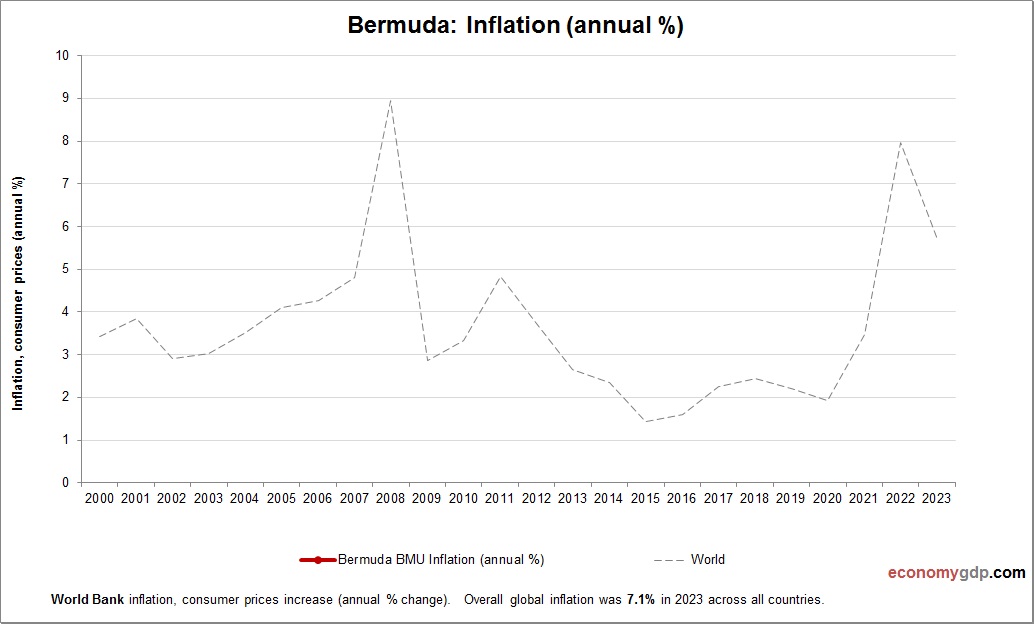
Bermuda’s inflation rate is around 2.5% in 2024, driven by high import costs for food and fuel in this affluent economy. Rising global prices and demand for luxury services add pressure, while the U.S. dollar peg stabilizes costs. Tight fiscal policy and high-income resilience keep inflation low despite external shocks.