The Belarus economy is state-controlled, with manufacturing, agriculture, and energy as key sectors. Machinery and chemical exports, particularly to Russia, are significant, but reliance on Russian energy and markets creates geopolitical risks. Sanctions, inflation, and limited diversification hinder growth. Reforms to attract foreign investment are underway, but political instability and an aging workforce pose ongoing challenges to achieving sustainable economic development.
Belarus Economy Size
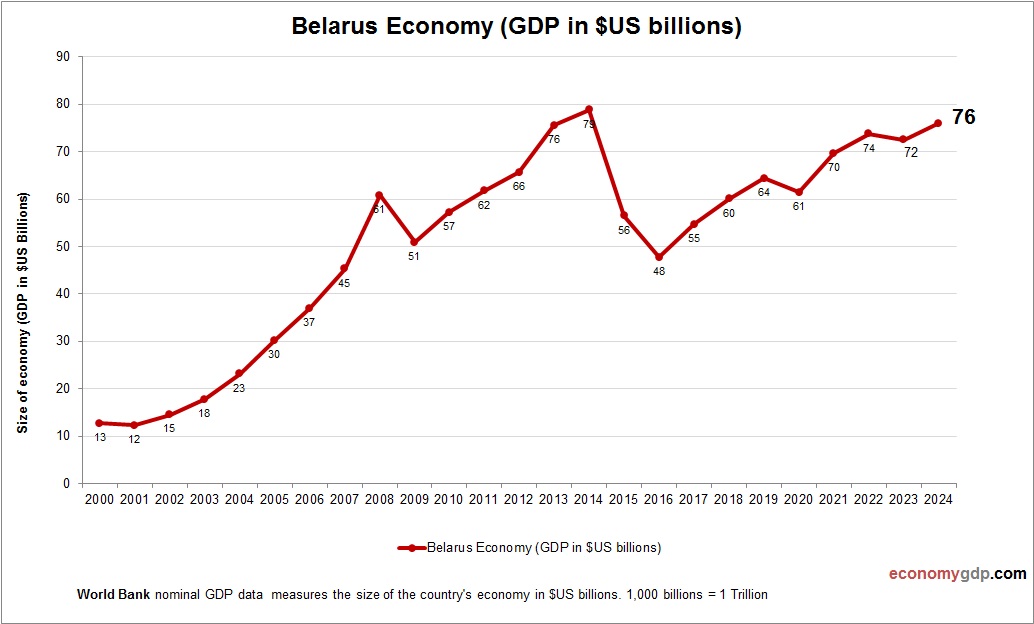
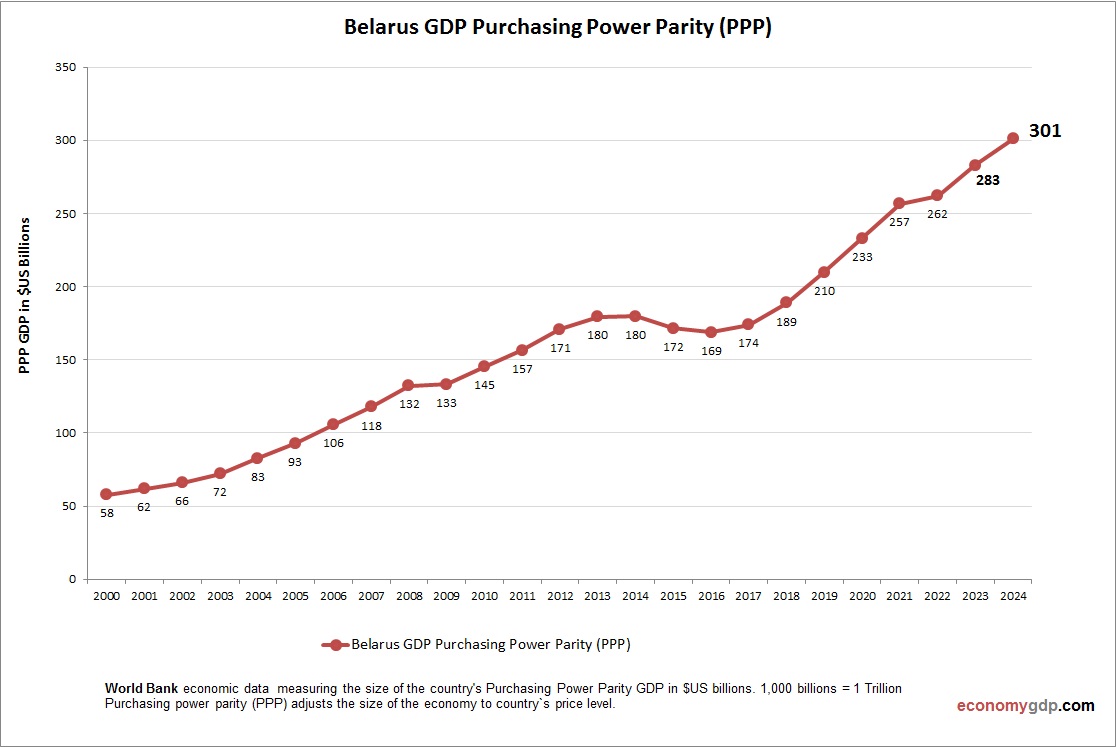
Belarus economy, valued at $70 billion, is mid-sized, shaped by state-controlled industries and trade with Russia. Its GDP reflects heavy industry and agriculture, though sanctions limit broader economic growth. See Belarus GDP.
Belarus Purchasing Power Parity (PPP)
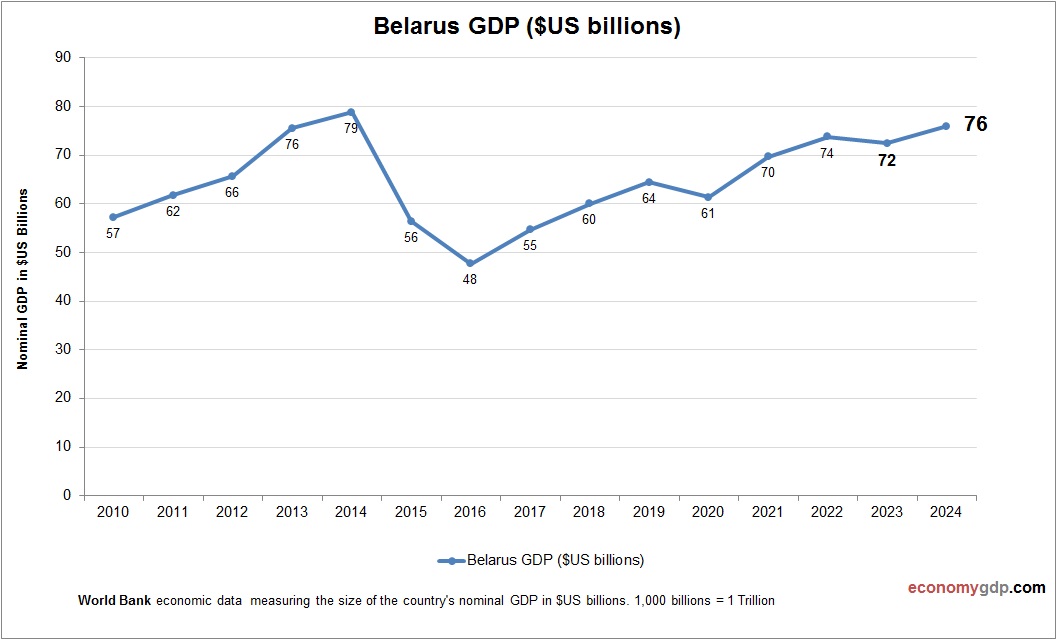
Belarus economy has a PPP GDP of $210 billion, three times its $70 billion nominal GDP, reflecting low costs for industry and agriculture. PPP per capita is around $22,000, suggesting decent living standards. State-controlled sectors gain from cost advantages, but sanctions and Russian dependence limit growth. PPP reveals a robust domestic market, yet political constraints hinder broader economic expansion.
Belarus Growth Rate
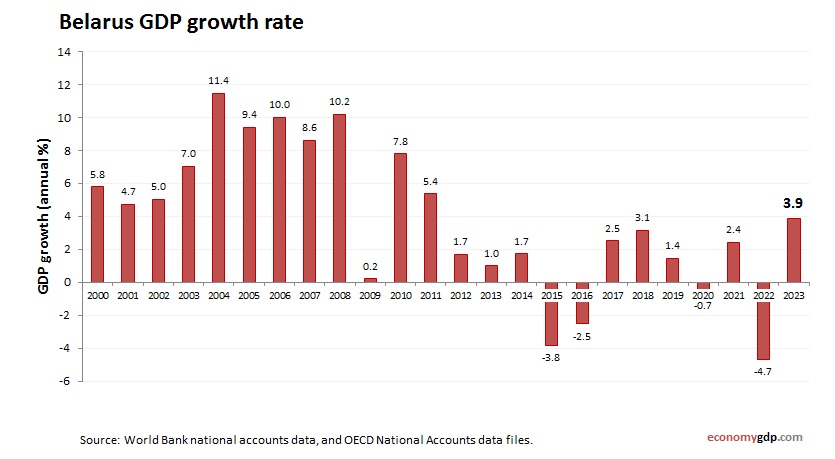
The economic growth rate is 2.0% in 2024, supported by trade with Russia and state-driven industry. Agriculture and manufacturing contribute, but Western sanctions and Russian market reliance limit expansion. Subsidized inputs drive resilience, though inefficiencies and geopolitical isolation hinder broader growth, with domestic demand recovery aiding stability.
Belarus Inflation
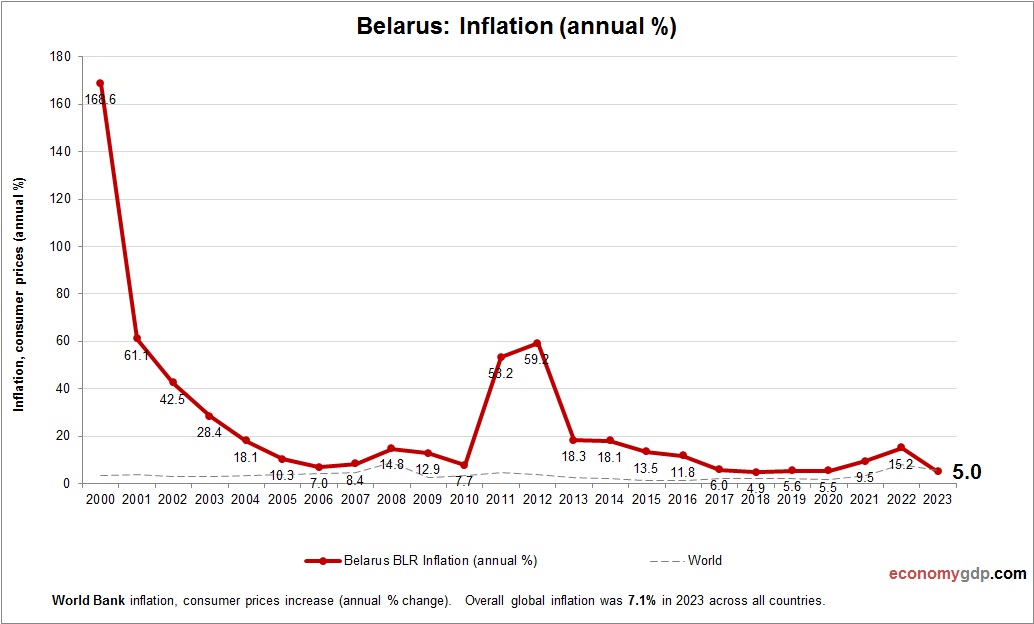
Belarus inflation rate is around 6% in 2024, driven by sanctions-induced supply chain disruptions and rising import costs. Trade dependence on Russia and state-controlled pricing fuel price volatility, while food and energy prices rise globally. Monetary controls and subsidies help moderate inflation, though geopolitical isolation poses ongoing risks.