The Azerbaijan economy is heavily reliant on oil and gas exports, which drive significant GDP growth and government revenue. The energy sector, centered in the Caspian Sea, attracts foreign investment, but diversification remains a challenge. Non-oil sectors like agriculture, tourism, and manufacturing are growing slowly, with efforts to reduce hydrocarbon dependency. Corruption and unemployment persist, impacting sustainable growth, while Azerbaijans strategic location enhances trade with Europe and Asia.
Azerbaijan Economy Size
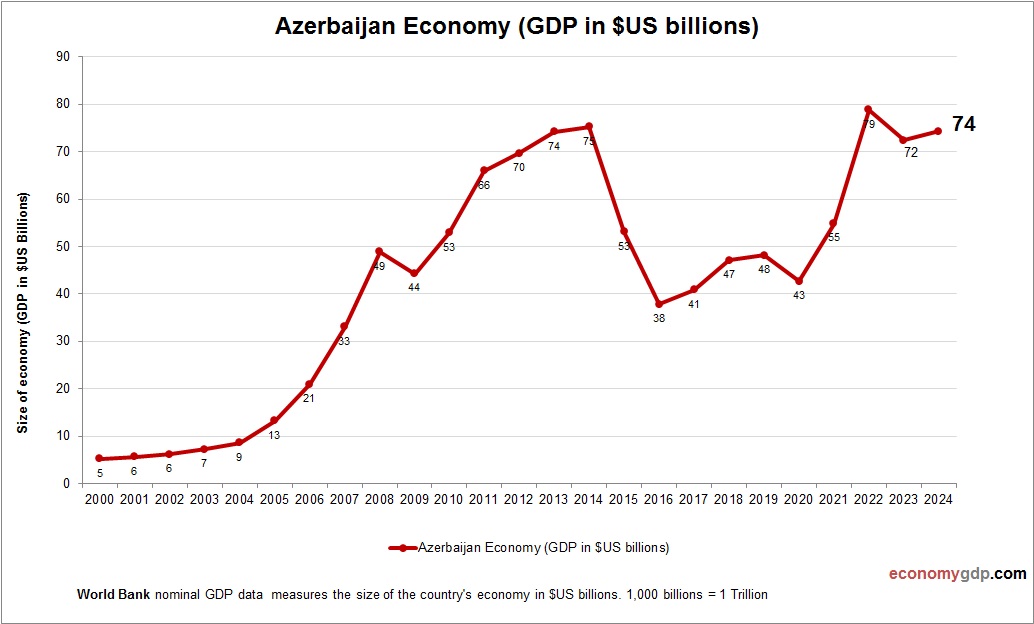
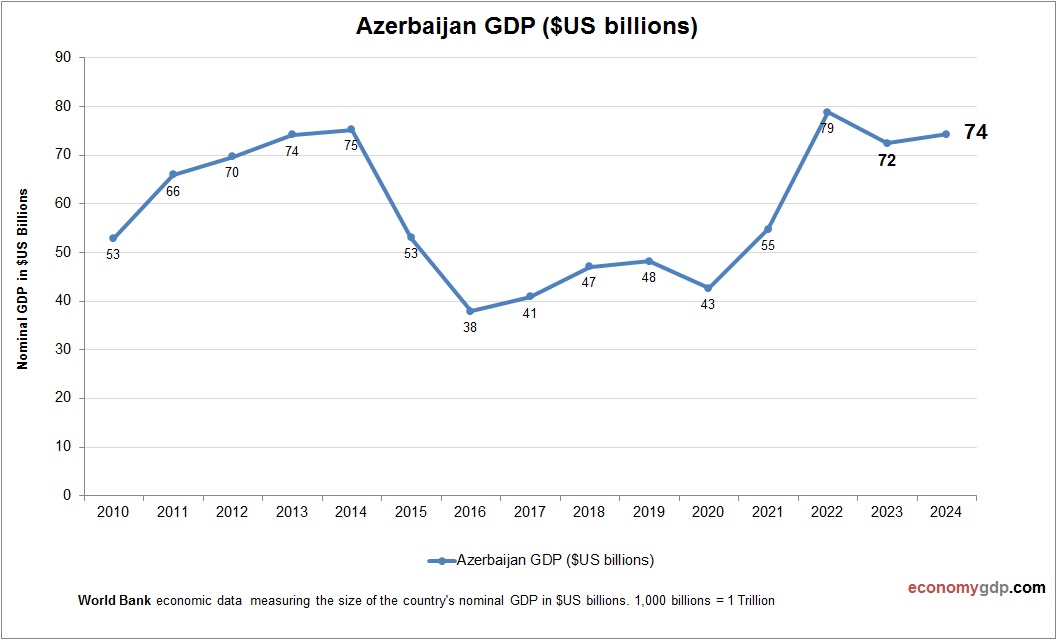
Azerbaijan’s economy, at $55 billion, is moderately sized, fueled by oil and gas exports. Its GDP reflects energy wealth, though diversification efforts aim to broaden the economic base beyond hydrocarbons. See Azerbaijan GDP.
Azerbaijan Purchasing Power Parity (PPP)
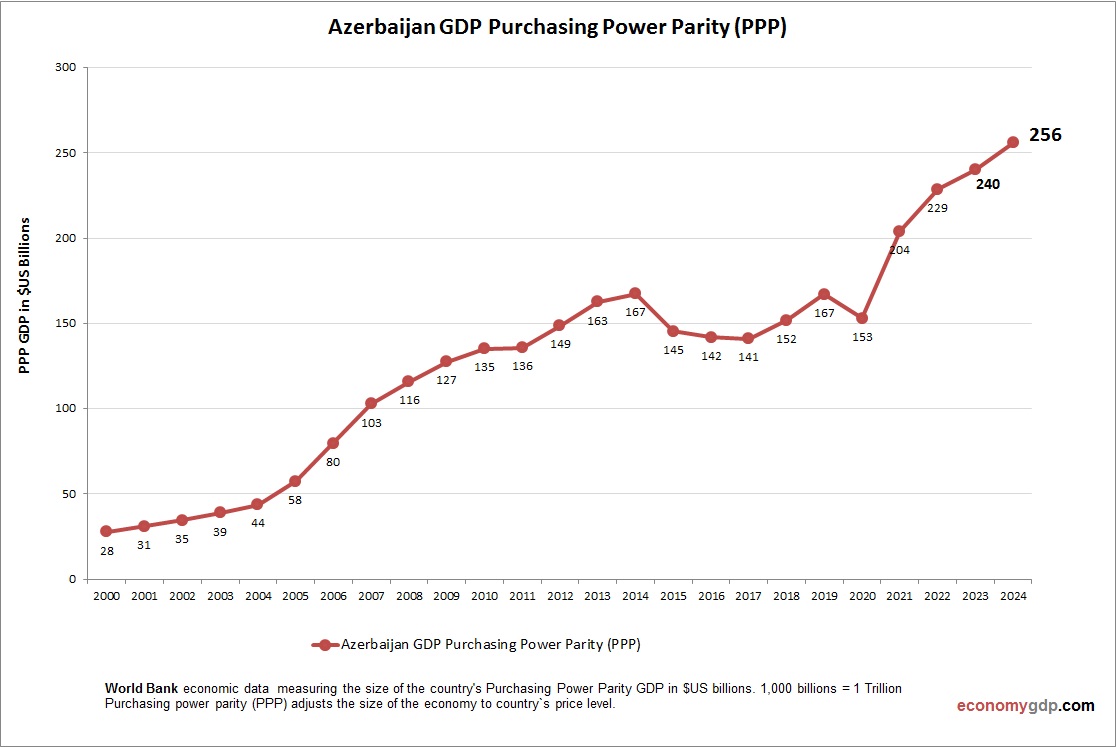
Azerbaijan’s economy has a PPP GDP of $200 billion, almost four times its $55 billion nominal GDP, due to low costs for agriculture and services. PPP per capita is around $19,000, indicating solid purchasing power. Oil and gas dominate, but PPP highlights potential in tourism and logistics. Slow diversification and energy reliance limit broader benefits from favorable domestic pricing, though investments in non-oil sectors could enhance economic output.
Azerbaijan Growth Rate
The economic growth rate is 2.8% in 2024, supported by stable oil and gas exports. Non-energy sectors like agriculture and tourism grow modestly, aided by diversification efforts. Global energy price fluctuations and limited reforms restrain expansion, while infrastructure projects like the Baku-Tbilisi-Kars railway contribute to stability.

Azerbaijan Inflation
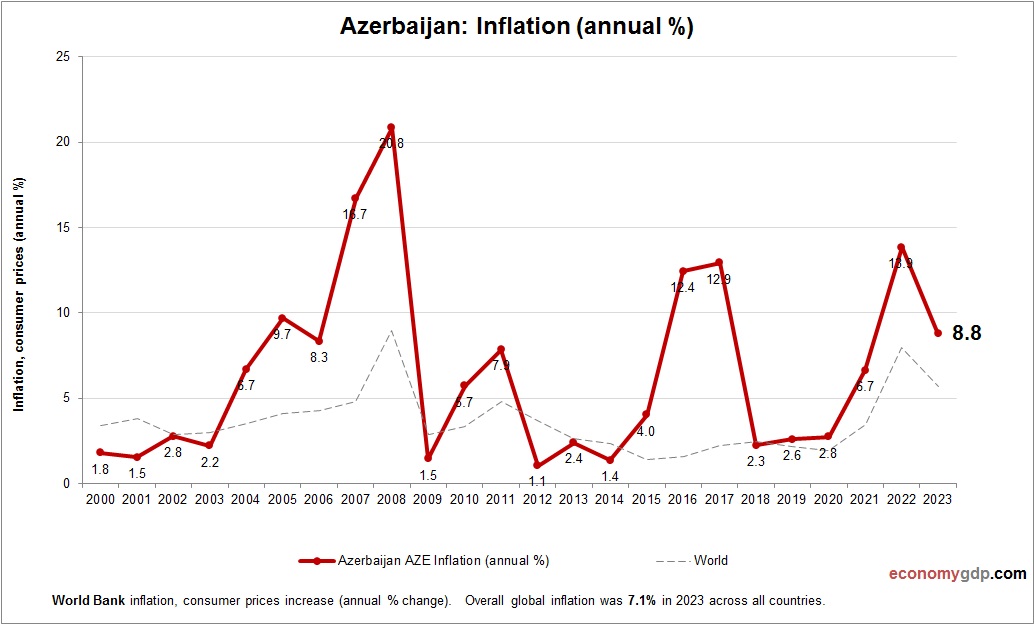
Azerbaijan’s inflation rate is around 4% in 2024, moderated by stable oil and gas revenues. Rising global food prices and currency fluctuations increase import costs, while infrastructure projects add demand pressure. Central bank interventions and energy subsidies limit inflation, though hydrocarbon reliance poses risks if prices fall.