Austria’s economy relies on manufacturing, tourism, and services. It excels in machinery, automotive parts, and chemicals, with strong EU exports. Tourism, driven by Vienna and the Alps, is a major contributor. Financial services also play a key role. Emerging industries include green technology, with hydropower and sustainable materials, and digital innovation in smart manufacturing. Austria’s skilled workforce and stable economy support growth, though high costs are a challenge. Investments in renewable energy and AI-driven industries ensure competitiveness. Austria’s focus on quality and sustainability positions it as a strong player in Europe’s industrial and tourism sectors.
Austria Economy Size
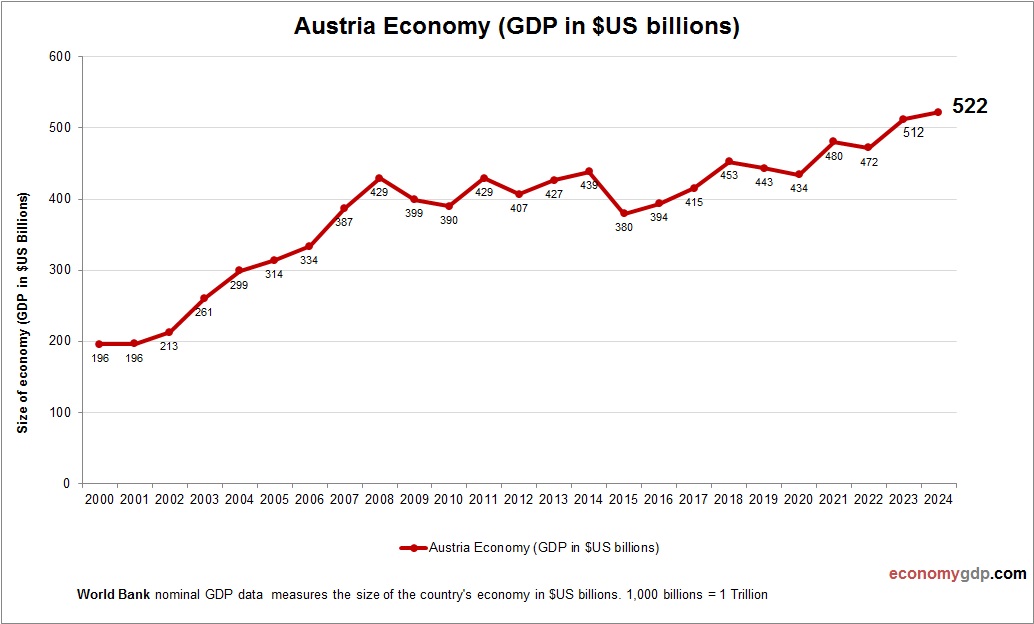
Austria’s economy, with a nominal GDP of about $400 billion, is driven by manufacturing, tourism, and services. Its industrial base and Alpine tourism bolster GDP. As an EU member, it benefits from trade and investment. Investments in green tech and digital innovation support growth, positioning Austria as a stable, high-income economy in Europe with a strong focus on quality and sustainability. See Austria GDP.

Austria Purchasing Power Parity (PPP)
Austria’s economy has a PPP GDP of around $600 billion. Manufacturing, tourism, and services drive its size, with high living costs tempering PPP. Its industrial base and Alpine tourism boost purchasing power, supporting high living standards. Investments in green tech and digital innovation enhance its PPP GDP, positioning Austria as a stable, high-income EU economy with strong quality and sustainability contributions.

Austria Growth Rate
Austria’s economy faces a negative growth rate of -0.1% in 2025. Manufacturing, tourism, and services struggle amid high energy costs and global demand slowdowns. Investments in green tech and digital innovation provide some support, but structural challenges limit progress. Austria’s skilled workforce and EU trade ties ensure resilience, with recovery expected as global markets stabilize, maintaining its role as a stable, high-income economy.

Austria Inflation
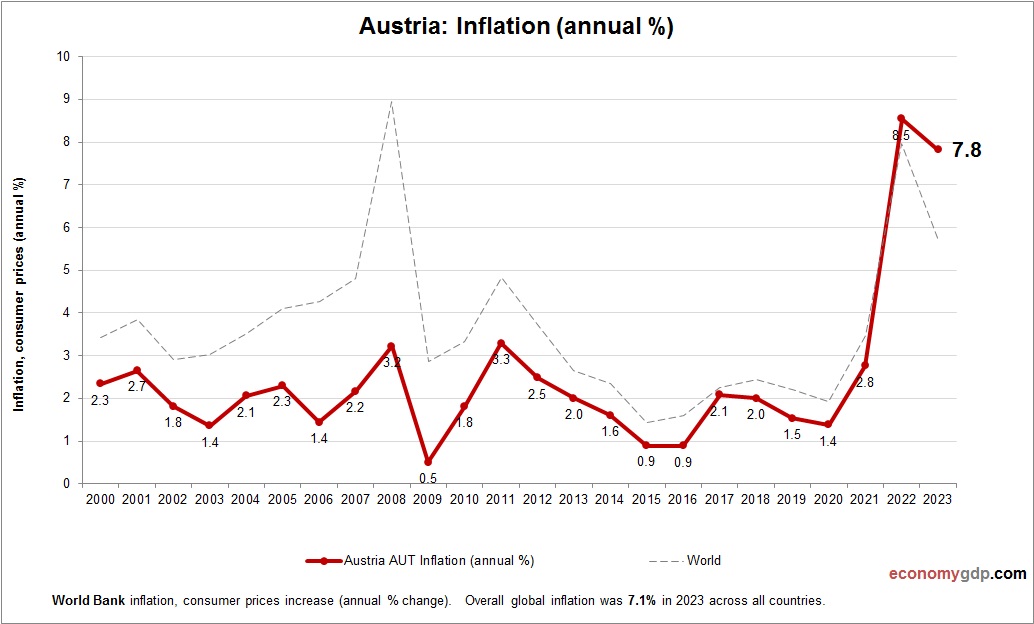
The Austria’s inflation is low at 2%, driven by energy costs and weak global demand. Tourism and manufacturing add minor pressure, but tight monetary policy and stable EU trade curb inflation. High living costs sustain modest price growth, while investments in green tech help control costs, keeping inflation low in a stable, high-income economy.