Zimbabwe’s economy, worth $25 billion, relies on agriculture, which employs 60% of the workforce, producing tobacco and cotton. Mining, particularly gold and platinum, drives 60% of exports. Tourism, tied to Victoria Falls, and remittances are significant. Emerging sectors include lithium mining, for battery production, and renewable energy (solar). Hyperinflation, sanctions, and political instability hinder growth, but reforms and Chinese investments in mining offer hope. Zimbabwe’s resource wealth and educated workforce support potential, provided governance and infrastructure improve.
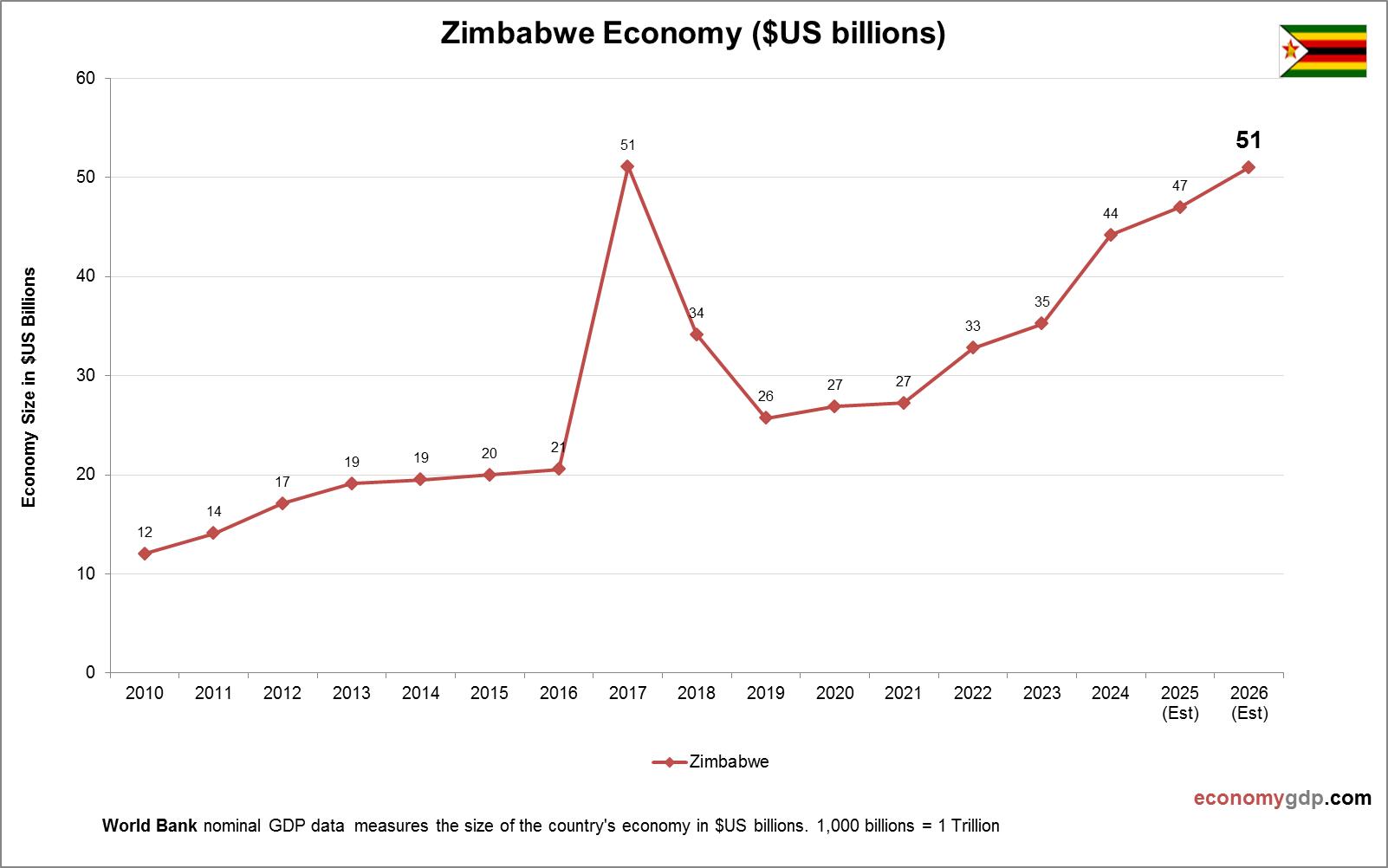
Zimbabwe Economy Size
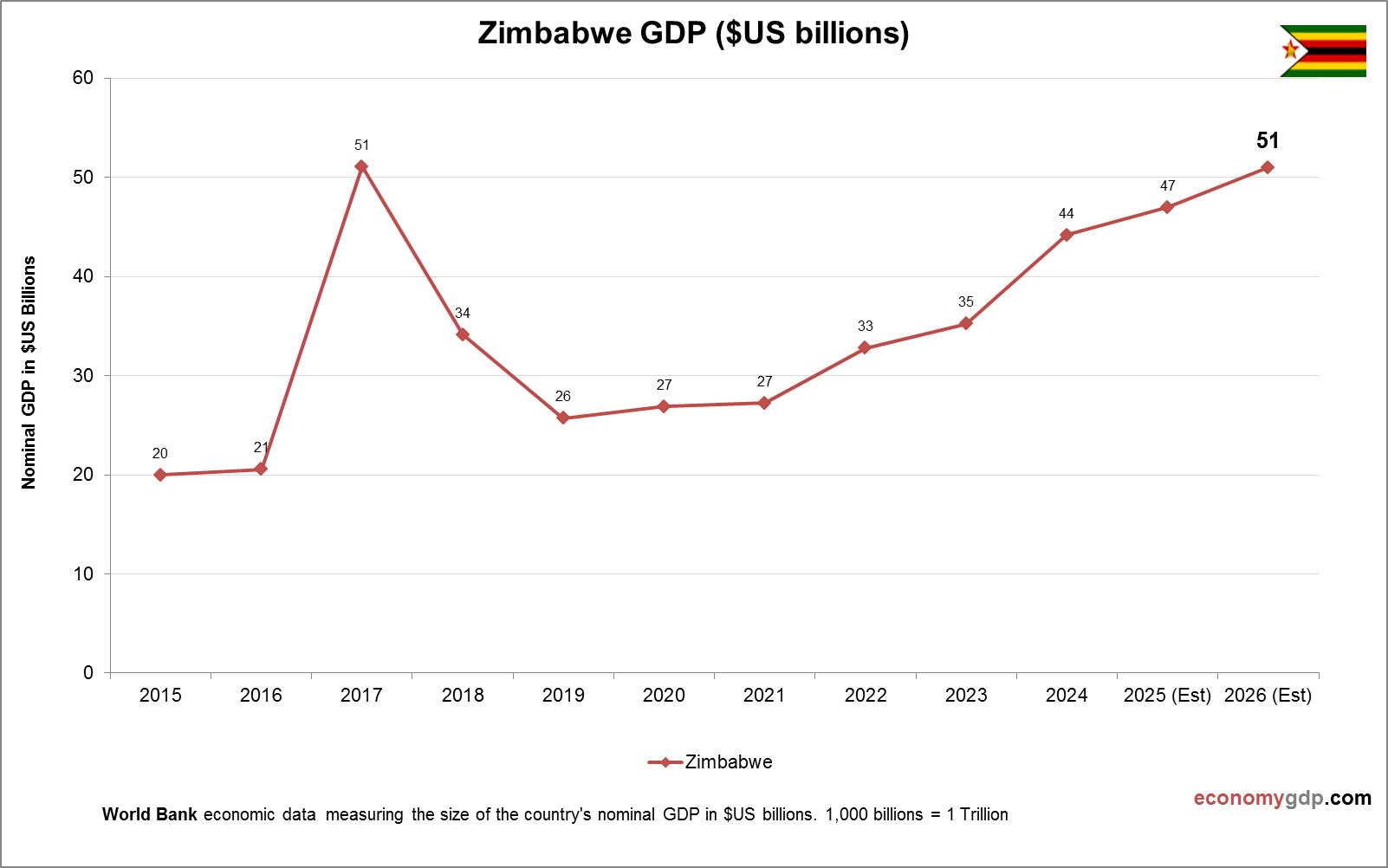
Zimbabwe’s economy, valued at $25 billion, is small, with mining and agriculture driving its GDP, constrained by instability. See Zimbabwe GDP.
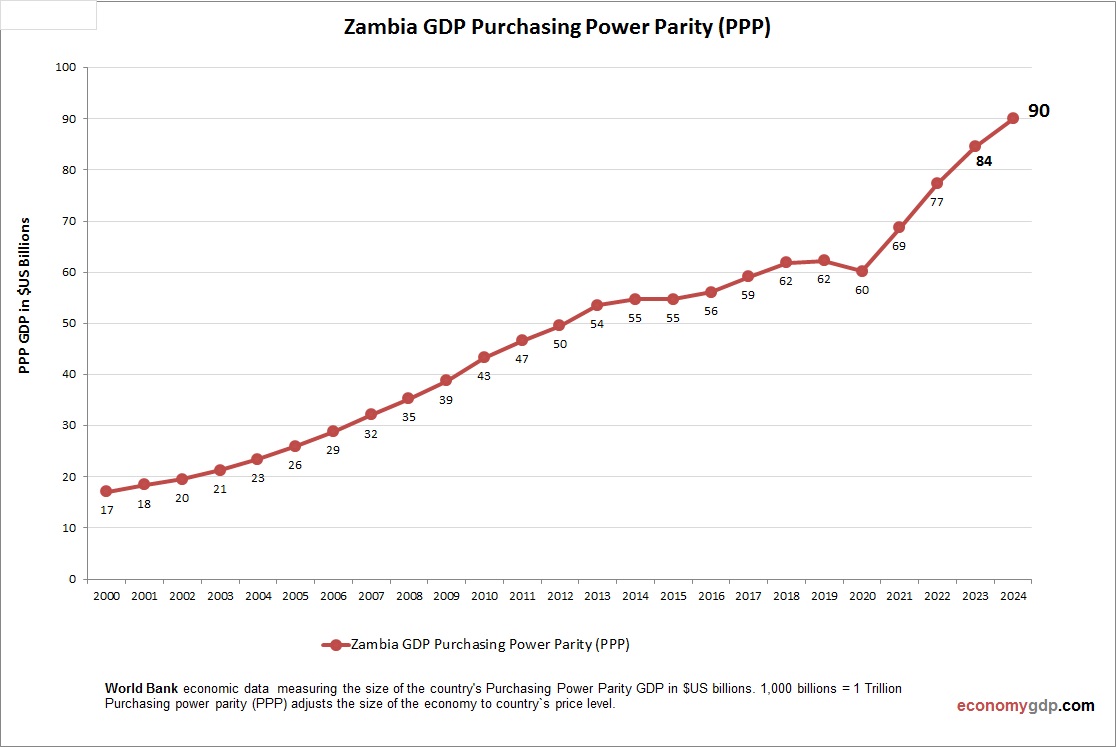
Zimbabwe Purchasing Power Parity (PPP)
Zimbabwe’s economy has a PPP GDP of $80 billion, over three times its $25 billion nominal GDP, driven by low costs for mining and agriculture. PPP per capita is around $5,000, indicating modest purchasing power. Domestic pricing boosts markets, but instability limits broader PPP-driven economic growth.
Zimbabwe Growth Rate
The economic growth rate is 3.0% in 2024, fueled by mining and agriculture. Tobacco exports and lithium production support growth, but political instability and debt pose risks. Tourism contributes, while foreign investment drives resilience, positioning the economy for steady progress if governance improves.

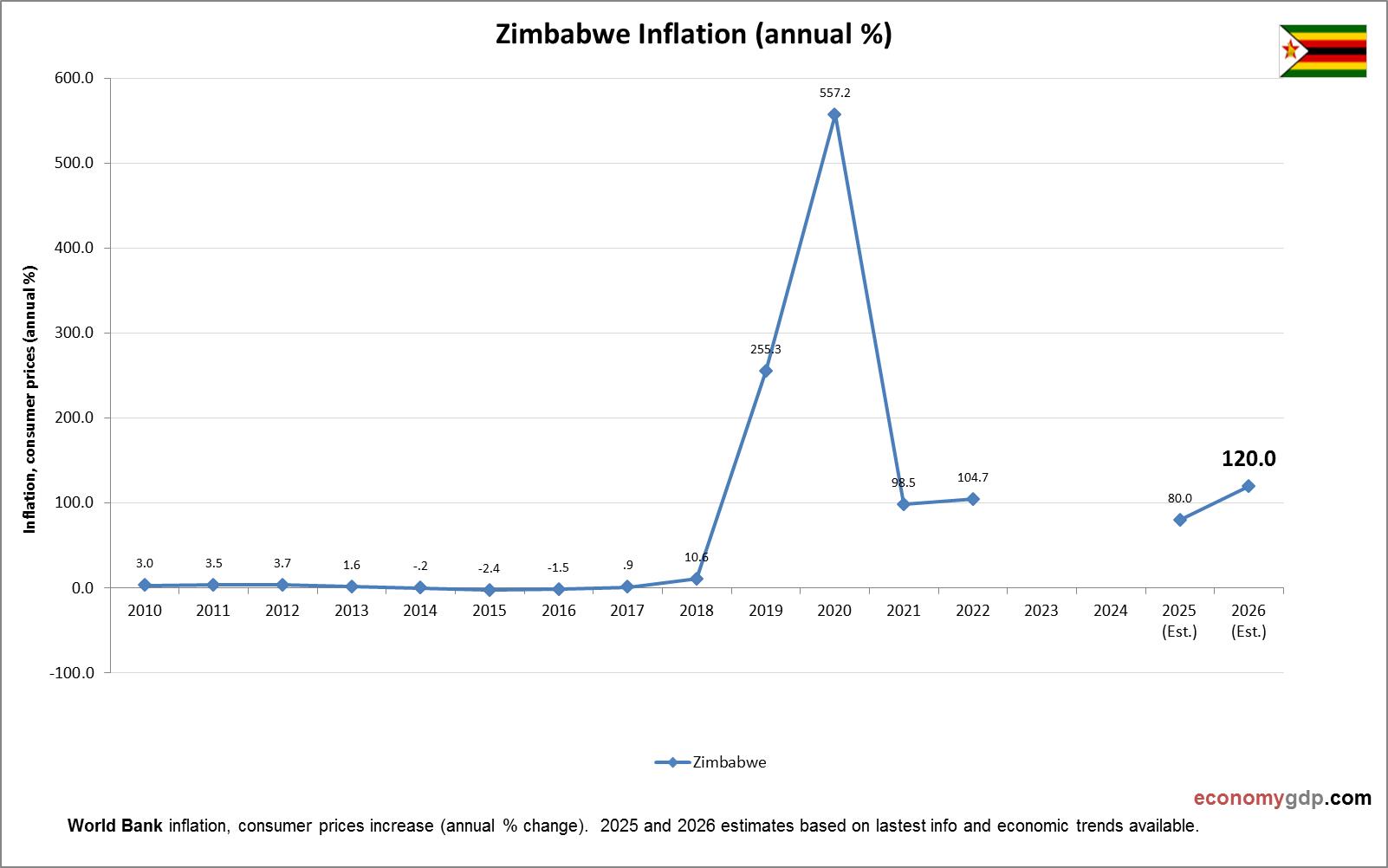
Zimbabwe Inflation
Zimbabwe’s inflation rate is about 20% in 2024, driven by currency depreciation and rising global food and fuel prices. Mining exports fuel demand, while agricultural disruptions from drought add pressure. Monetary instability and fiscal deficits sustain volatility, though reforms and commodity revenues help moderate inflation in this challenged economy.