
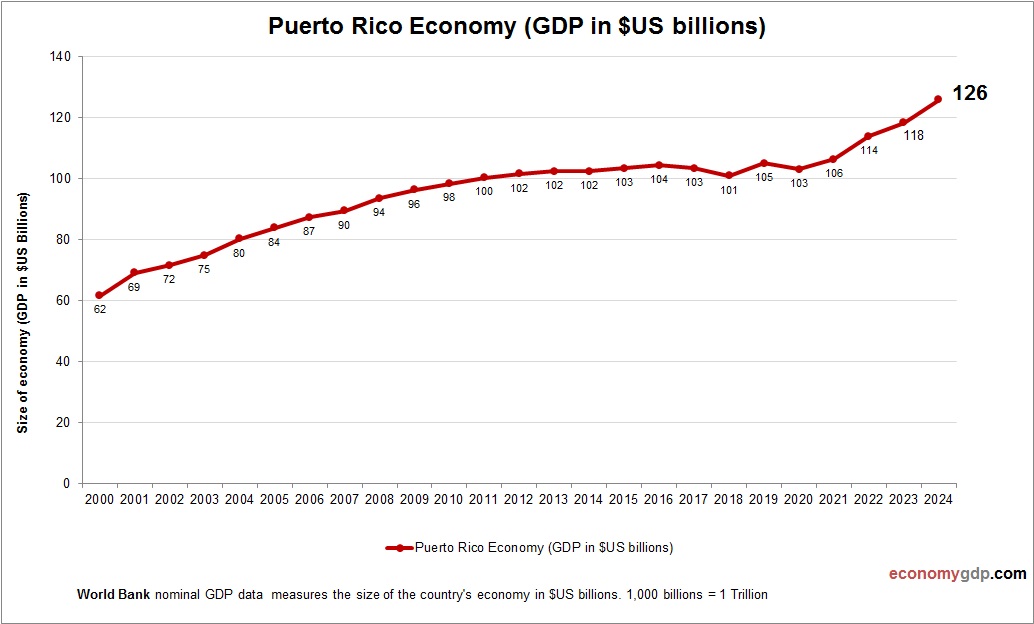
Puerto Rico’s economy, worth $105 billion, relies on manufacturing, particularly pharmaceuticals and electronics, which drive exports. Services, including tourism and finance, are key, with San Juan as a hub. Agriculture, producing coffee and sugarcane, is small but resurging. Emerging sectors include renewable energy (solar) and tech, supported by tax incentives. Debt restructuring and hurricane recovery efforts continue, with federal aid boosting infrastructure. High energy costs and outmigration challenge growth, but strategic location and U.S. ties offer potential for trade and investment.
Puerto Rico Economy Size
Puerto Rico’s economy, worth $105 billion, is mid-sized, with manufacturing and services driving its GDP, bolstered by U.S. ties. See Puerto Rico GDP.
Puerto Rico Purchasing Power Parity (PPP)
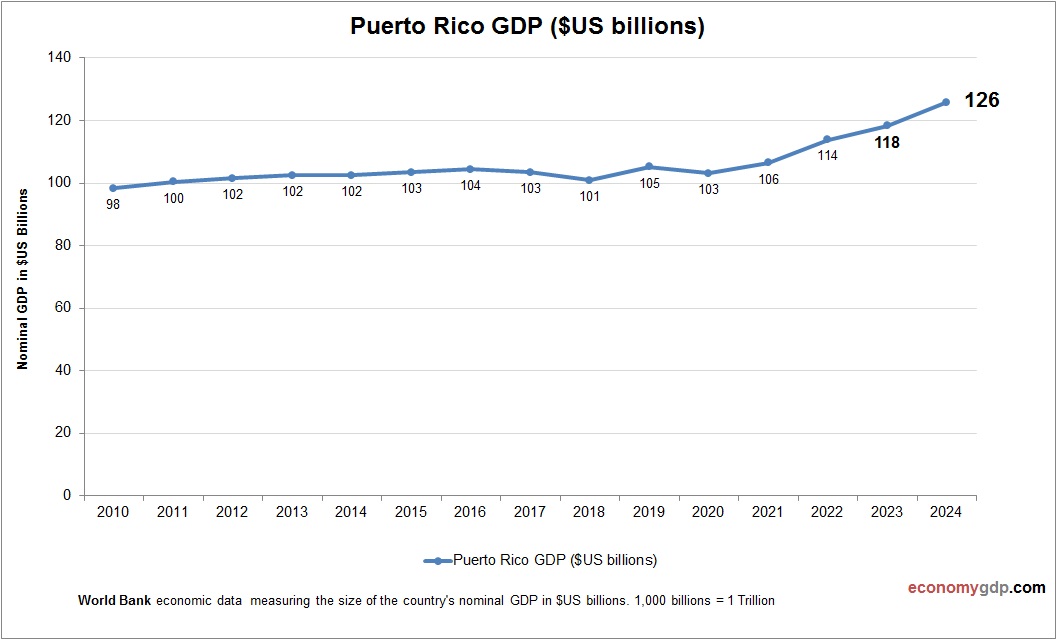
Puerto Rico’s economy has a PPP GDP of $140 billion, exceeding its $105 billion nominal GDP, reflecting moderate costs for manufacturing and services. PPP per capita is around $40,000, indicating strong purchasing power. Domestic pricing and U.S. ties boost markets, supporting PPP-driven economic stability.
Puerto Rico Growth Rate
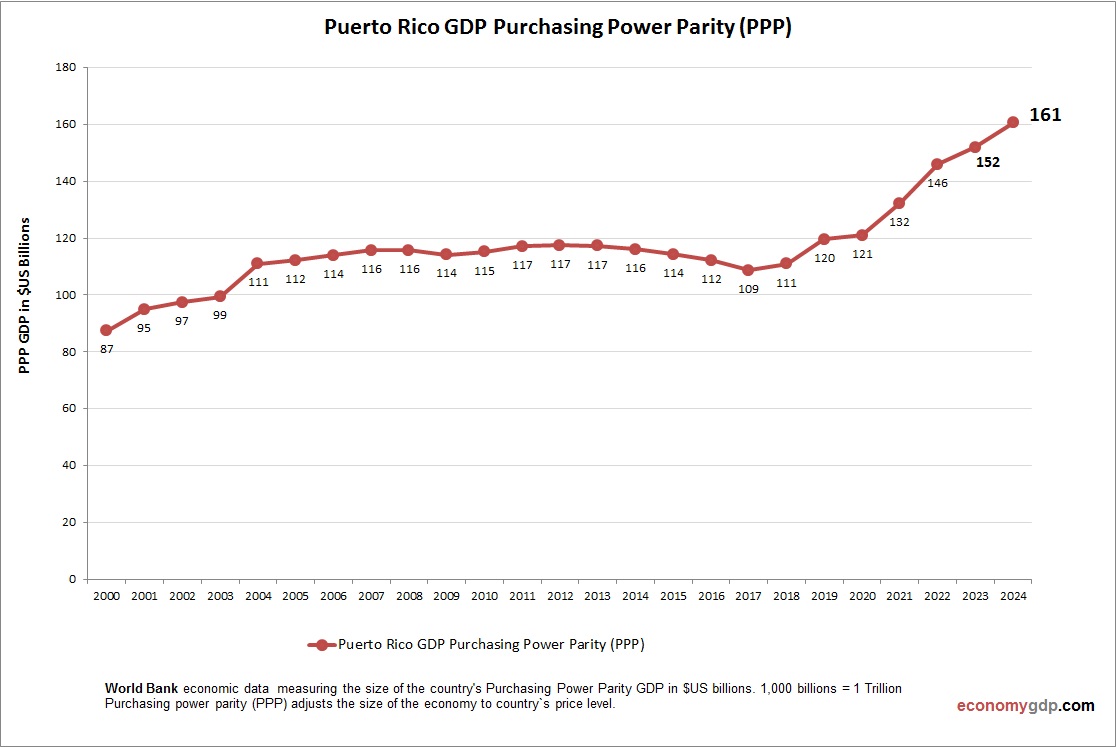
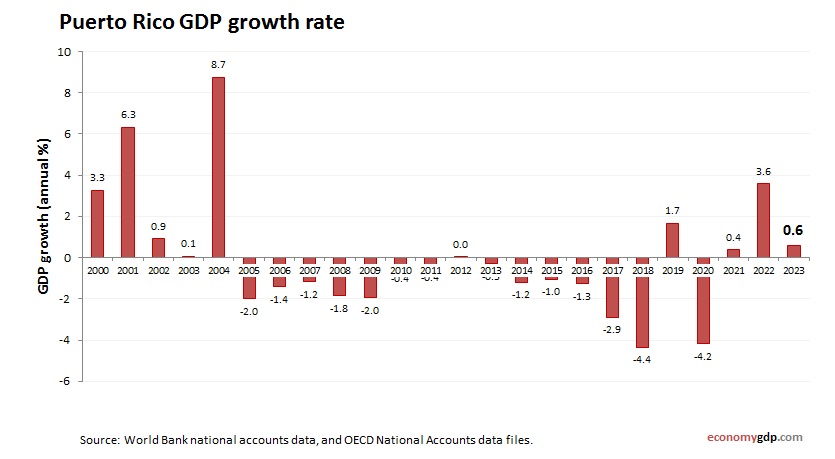
The economic growth rate is 2.0% in 2024, driven by manufacturing and services. Pharmaceuticals and tourism support growth, but high debt and outmigration pose risks. U.S. aid and infrastructure investments drive resilience, while fiscal reforms enhance momentum, positioning the economy for modest recovery.
Puerto Rico Inflation
Puerto Rico’s inflation rate is around 3% in 2024, driven by rising global food and fuel prices in this U.S.-linked economy. Tourism and manufacturing demand increase service costs, while import reliance adds pressure. Stable monetary policy and federal aid help keep inflation moderate, though high costs sustain price volatility.
